Discover what an intimate elopement in a Venetian church truly feels like. The story of Ruth and Alan at San Zaccaria reveals the sacred, timeless atmosphere that makes this church the most powerful place to elope in Venice.
For couples considering San Zaccaria, the choice of church is inseparable from the choice of how the entire day is structured. If you want to understand how the photography of such a day is planned from the ceremony through to the gondola and the open lagoon, the full guide to intimate elopement photography in Venice explains the approach in detail.
A private beginning in Venice
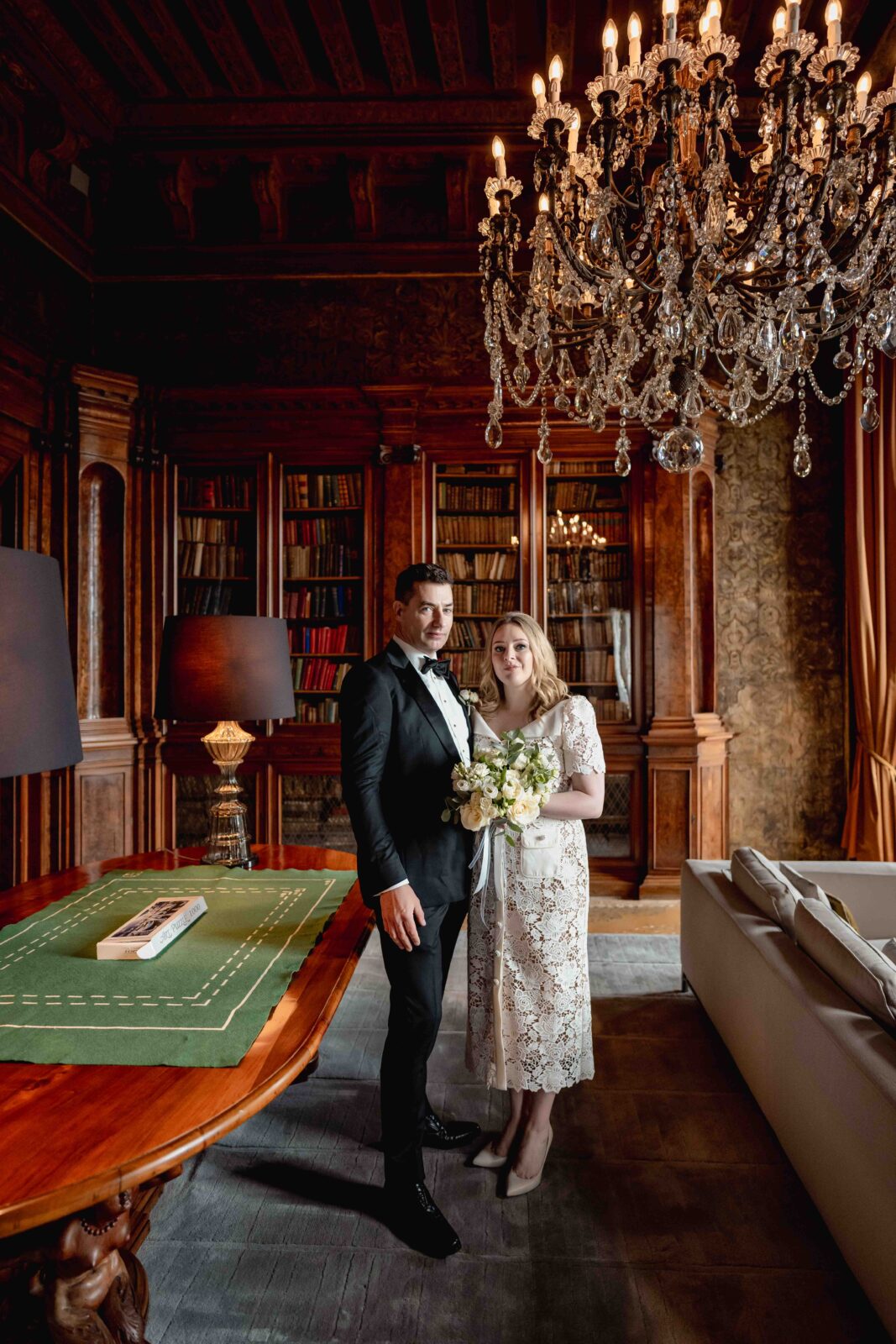
Their day began at the Aman, a 5-star hotel in a 16th-century palace on the Grand Canal famous for its original frescoes by Tiepolo. Before leaving, they moved slowly through the interior spaces: the staircases, the main rooms, the balcony overlooking the water. These moments before departure were not transitional; they were already part of the experience.
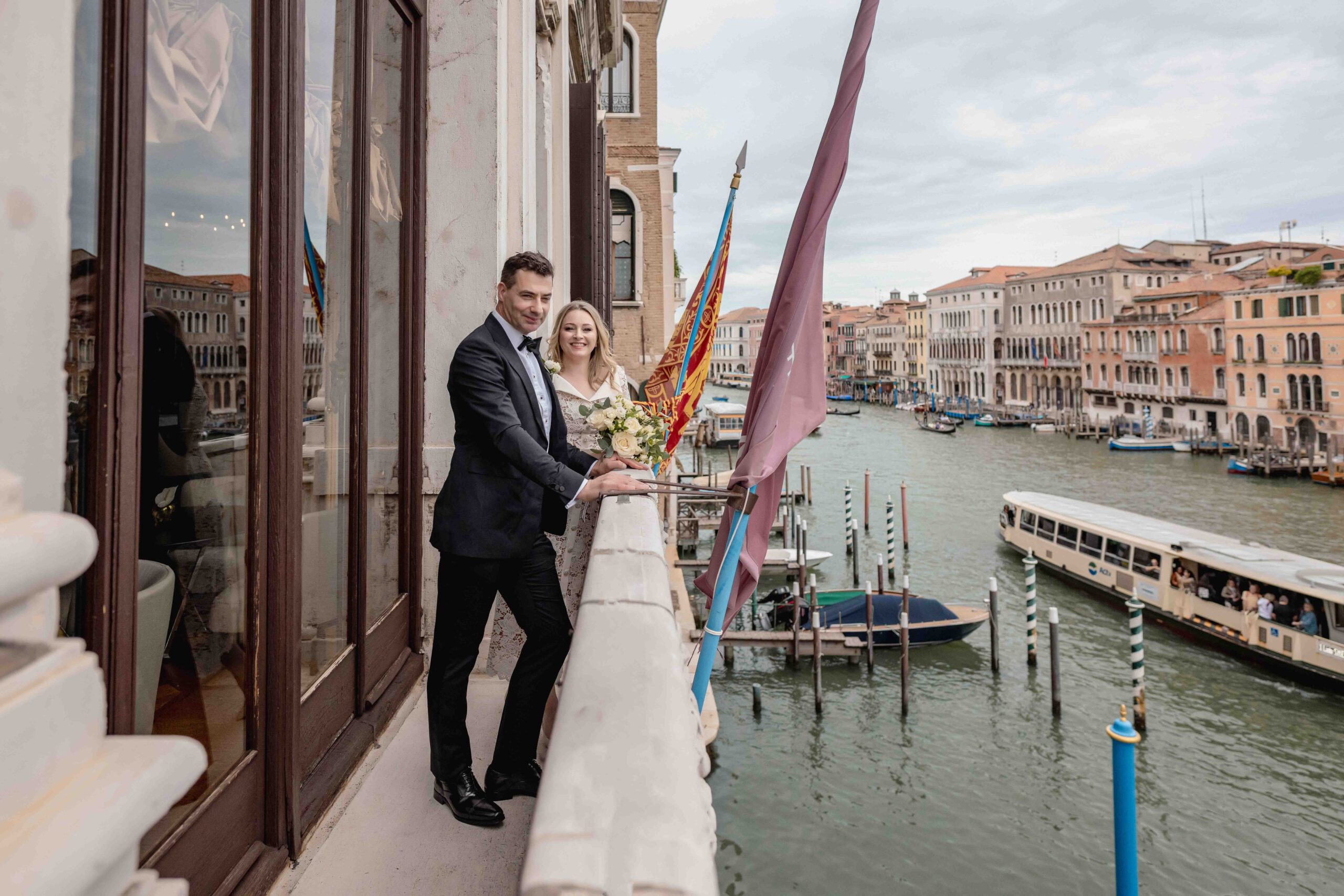
The city was still at a measured pace. From the balcony, Venice appeared composed and restrained, offering distance rather than noise. When they left by boat taxi, the movement felt deliberate, almost ceremonial in itself. A passage rather than a transfer.
Why San Zaccaria Is the Right Place for a Church Elopement in Venice
Venice holds nearly 140 churches across its islands and sestieri. Yet very few combine the scale, the historical depth, and the atmospheric quality needed for a genuinely intimate elopement in Venice.
San Zaccaria offers something rare: a church that is simultaneously monumental and human in its proportions. The stone absorbs sound. The light enters slowly, filtered by depth and centuries. The space invites presence rather than performance. You do not read it. You inhabit it.
For a couple choosing to elope in a Venice church, this atmospheric quality is not decorative. It is structural. It defines the emotional register of the entire experience before a single word is spoken.
Arriving from the Aman: When the Approach Is Already Part of the Elopement Experience
Ruth and Alan began their day at the Aman Venice, a five-star hotel in a 16th-century palace on the Grand Canal, its interior preserving original frescoes by Tiepolo. Before leaving, they moved slowly through its spaces: the grand staircases, the frescoed reception rooms, the balcony suspended above the water.
This was not a transitional moment. It was already part of the day. The quality of the surroundings prepared the emotional register for what would follow. Venice, seen from that balcony in the early hours, appeared composed and generous with its silence.
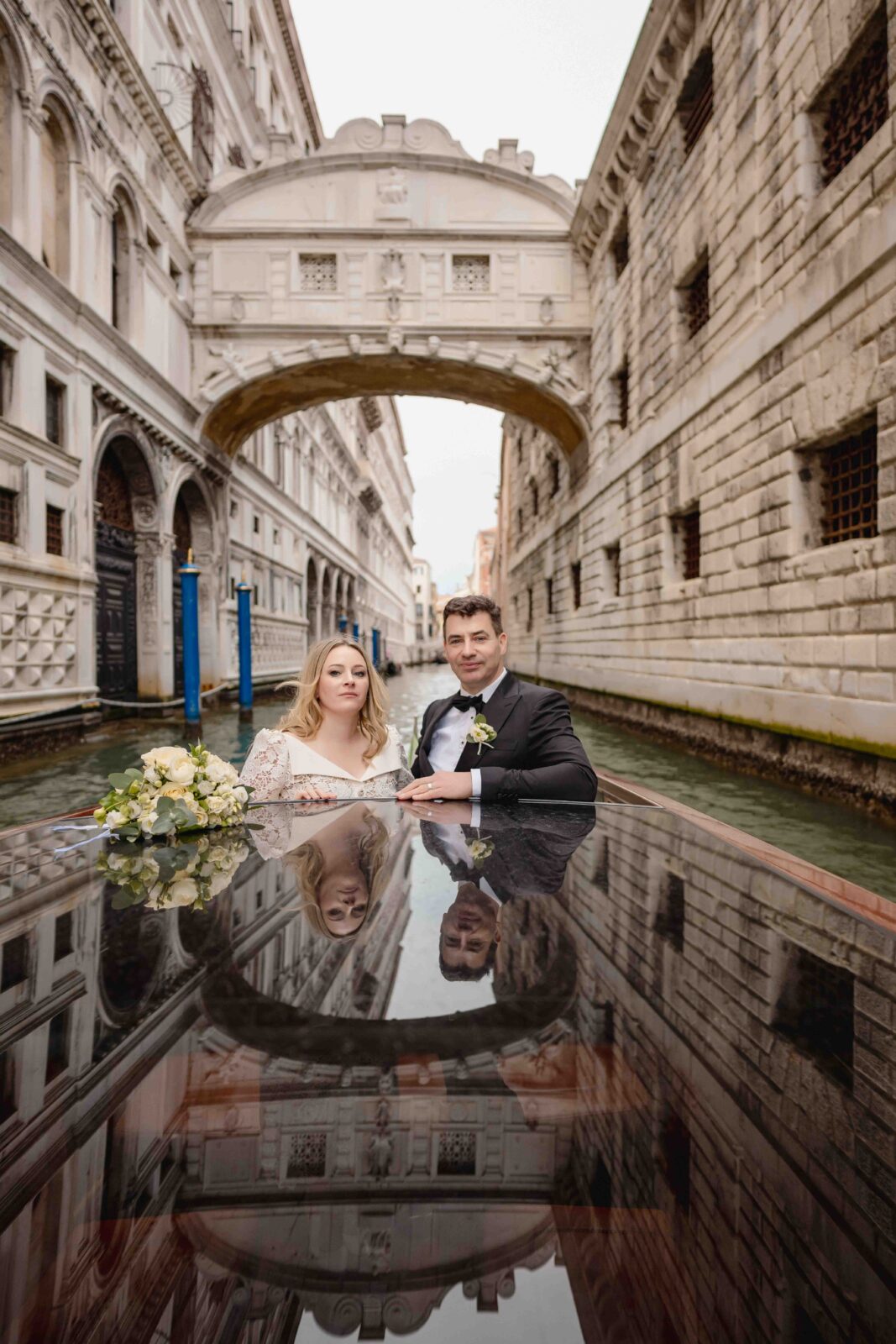
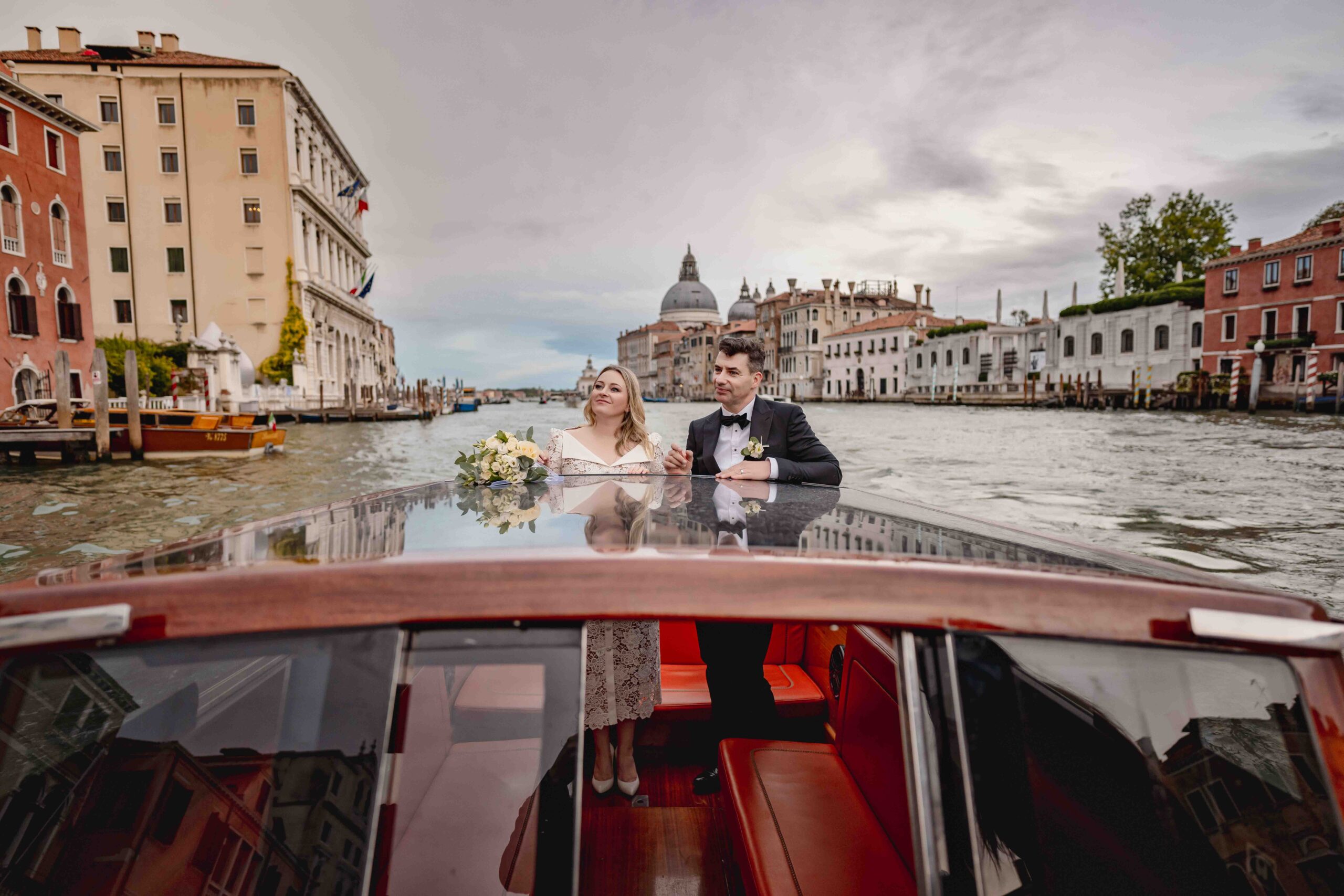
They left by private boat taxi. The passage across the water felt deliberate. A gondola elopement experience in Venice is often chosen for exactly this reason: water travel transforms a simple transfer into something that belongs to the day rather than interrupting it.
San Zaccaria Venice: History, Architecture, and Sacred Atmosphere
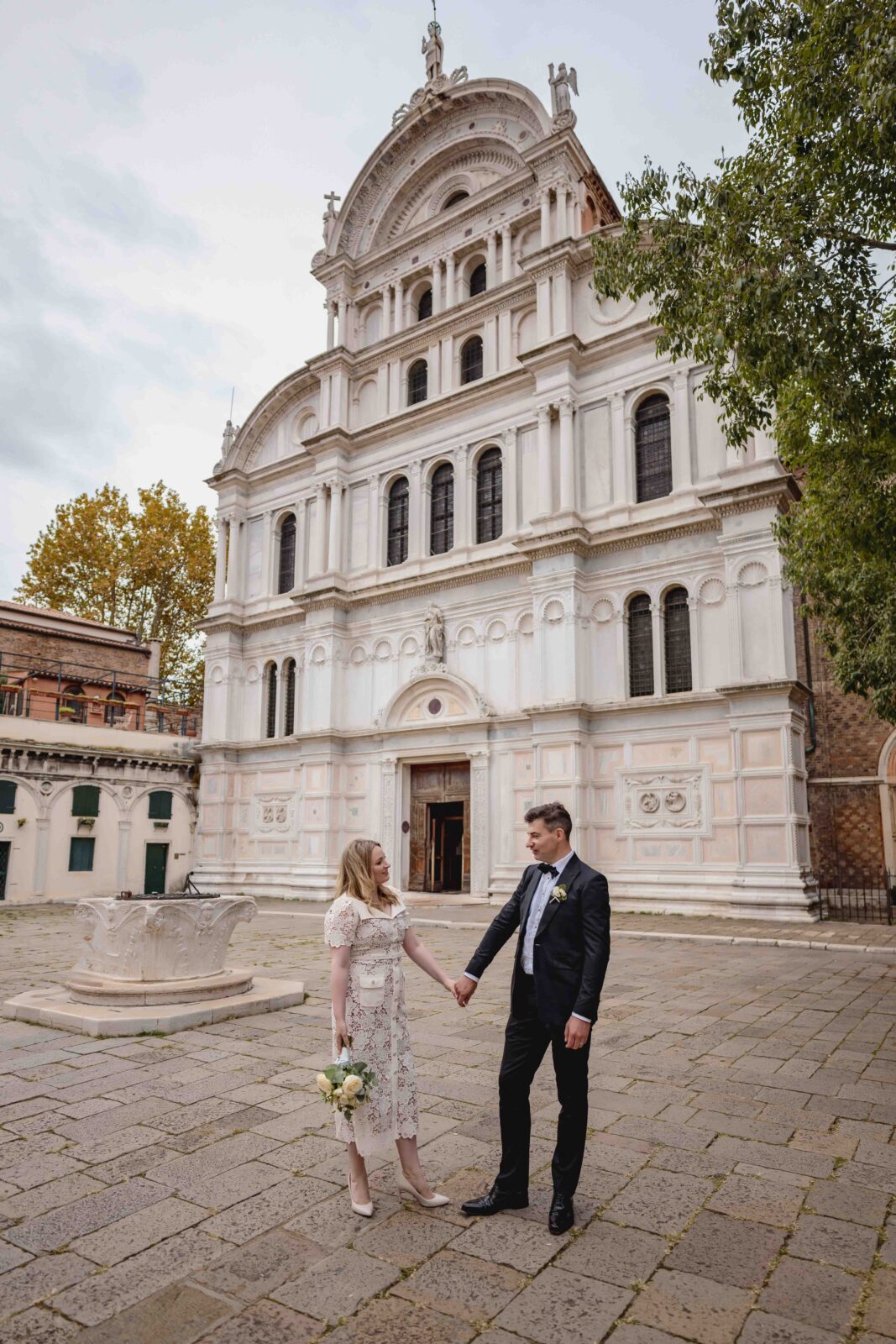
The Church of San Zaccaria was founded in the 9th century and rebuilt in its current form between the 15th and 16th centuries. It stands a few steps from the Riva degli Schiavoni, at the edge of the Castello district. Its Istrian stone facade blends Gothic and Renaissance elements with the characteristic precision of Venetian stone carving.
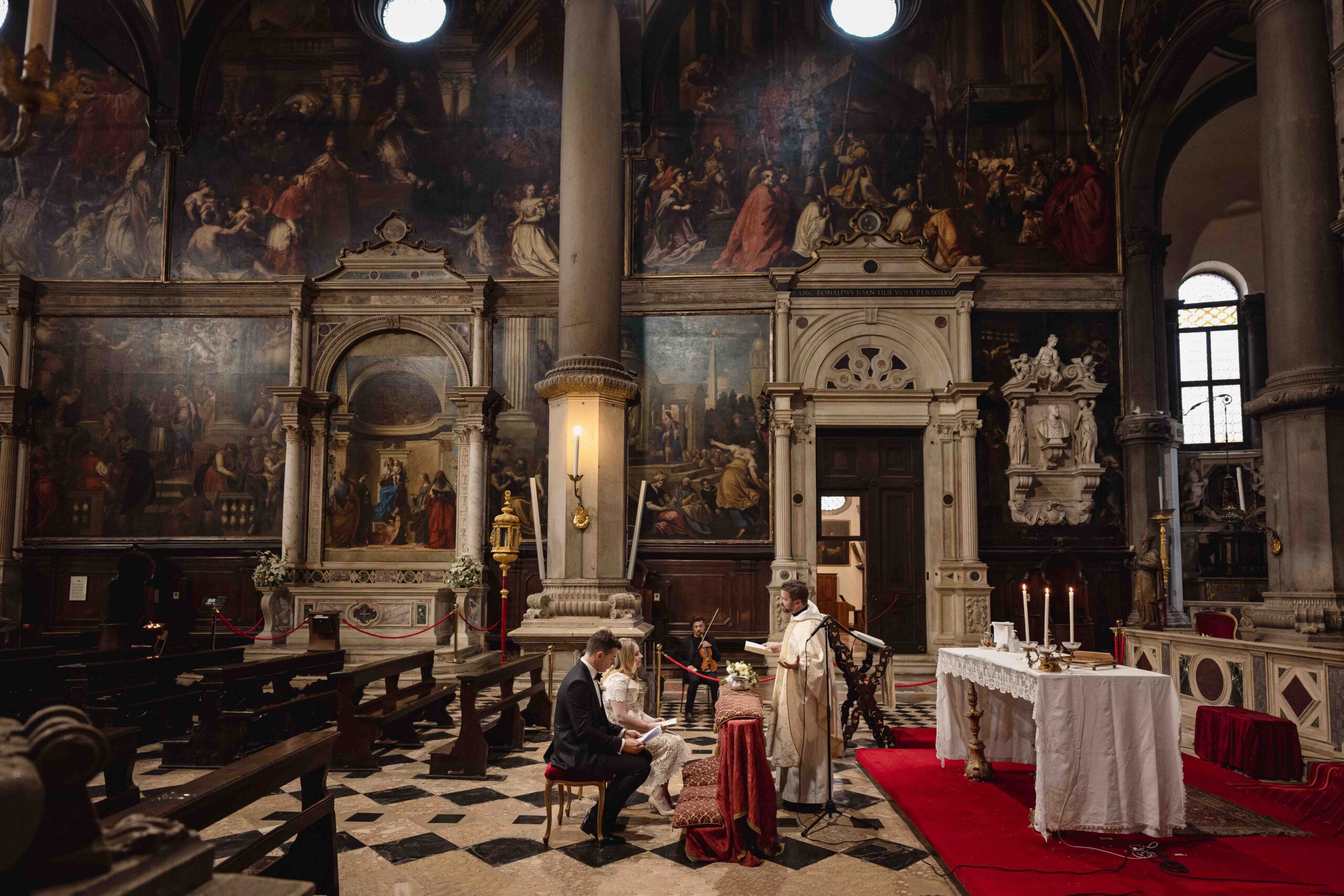
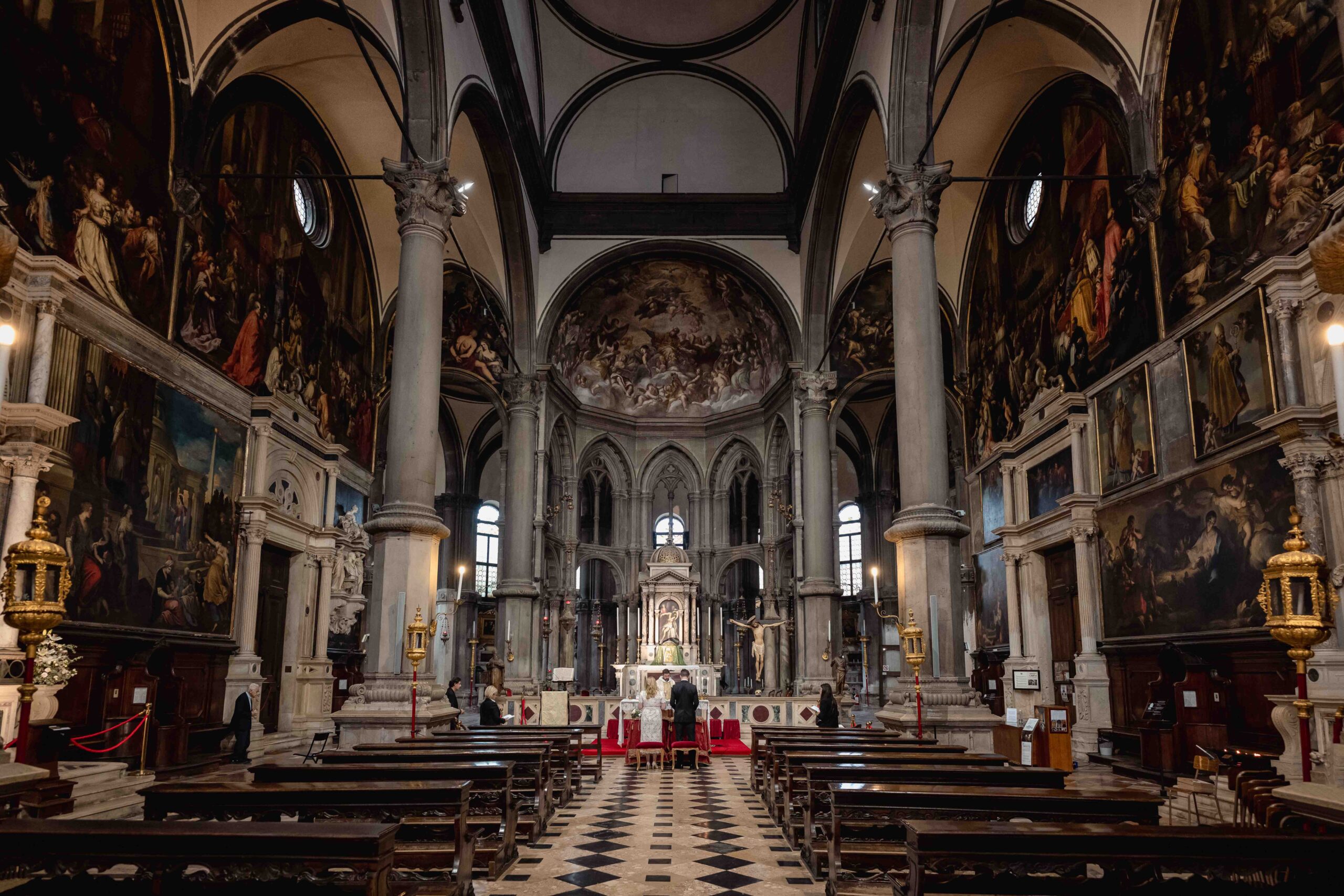
Inside, the space expands both vertically and laterally. The nave is high. The columns are measured and evenly spaced. The light is diffuse and lateral. Giovanni Bellini’s celebrated altarpiece “Sacred Conversation” occupies a side chapel, its figures arranged with the same spatial intelligence that governs the architecture surrounding them.
A Gothic-Renaissance Masterpiece Carved in Istrian Stone
The facade of San Zaccaria is considered one of the finest examples of the Gothic-Renaissance transition in the entire lagoon. The lower registers maintain the vertical pull of Gothic design. The upper levels introduce classical Renaissance restraint. This tension between two architectural vocabularies produces a facade that appears both ancient and entirely resolved.
For a couple choosing to elope in a Venetian church, this visual complexity is not an incidental detail. The space is layered, historically saturated, and architecturally alive. Standing before it, you feel centuries rather than simply observe them.
The Flooded Crypt and the Memory of the Doges
Below the main floor of San Zaccaria, a flooded crypt holds the tombs of eight early Doges of Venice. The water level rises and falls with the acqua alta cycle, creating a space that is visually extraordinary and emotionally arresting. This is not a metaphor. It is Venice’s geology made visible: the ground is not stable, and the past is always partially submerged.
For a church elopement in Venice that seeks meaning beyond aesthetics, the crypt of San Zaccaria offers exactly the kind of historical resonance that transforms a location into an experience.
What an Intimate Religious Rite at San Zaccaria Actually Feels Like
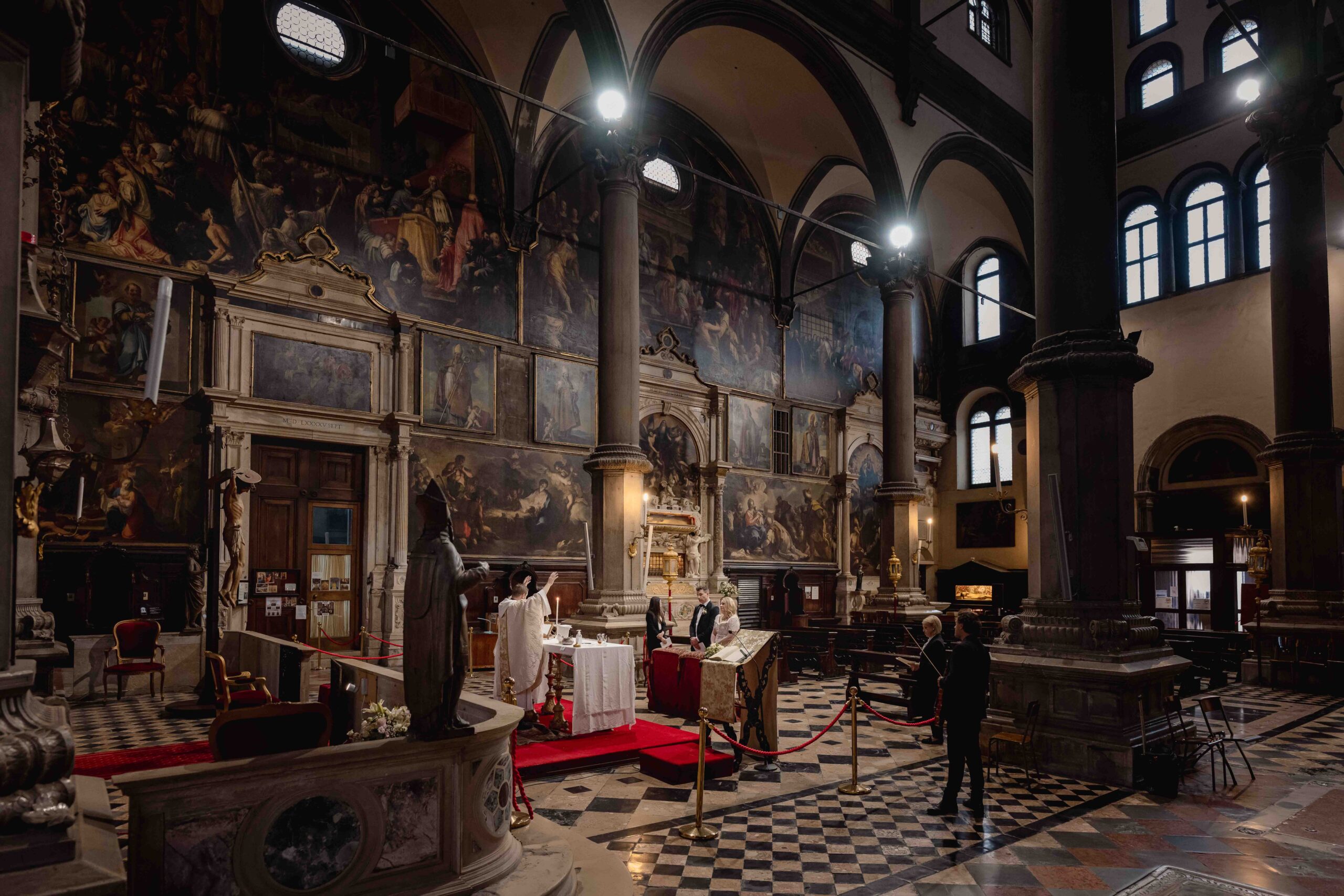
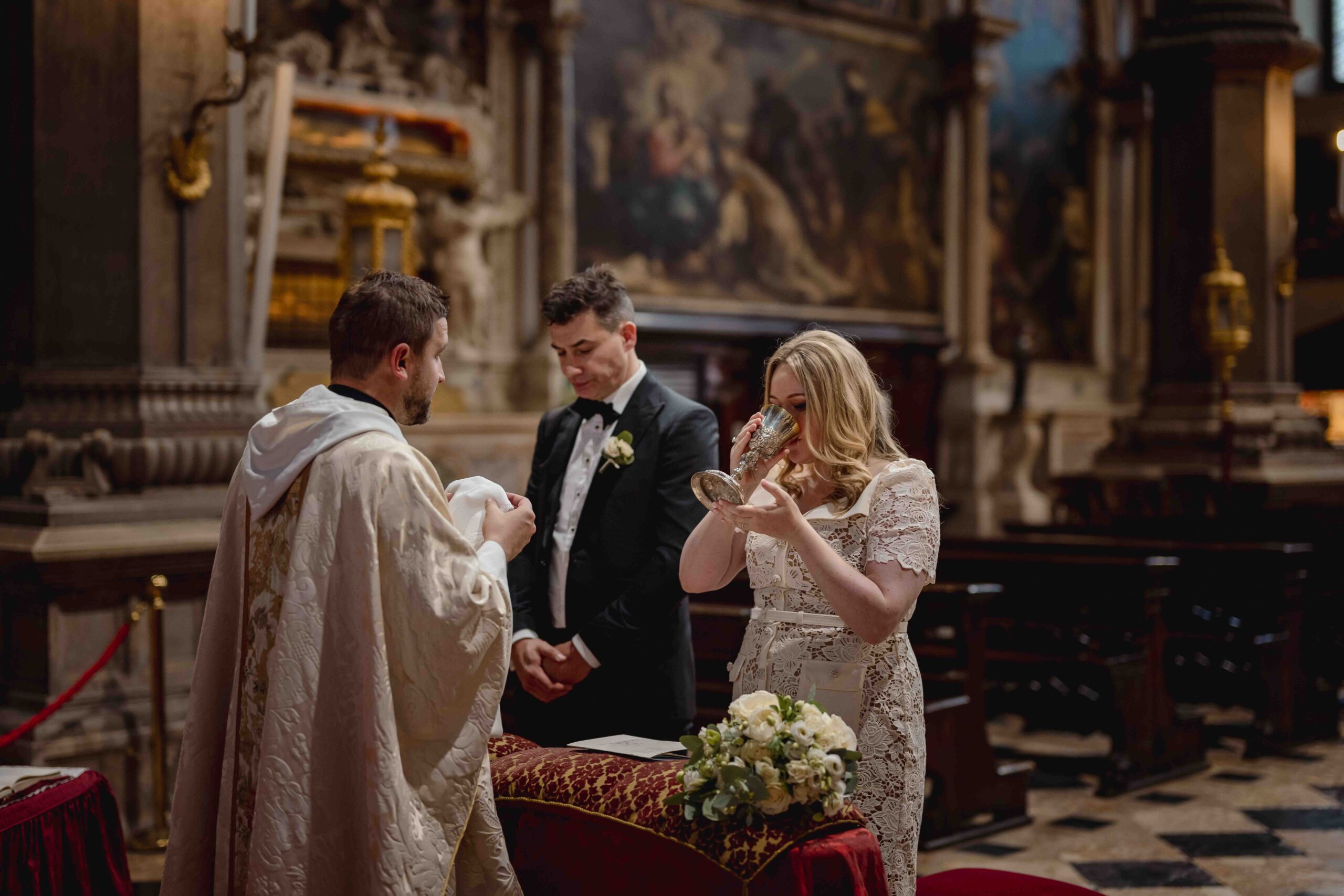
Inside San Zaccaria, Ruth and Alan lived a religious rite defined entirely by discretion. There was no audience, no choreography, no external rhythm to adapt to. The experience unfolded in the church’s natural silence, shaped by the proportions of the vault above rather than by any external presence.
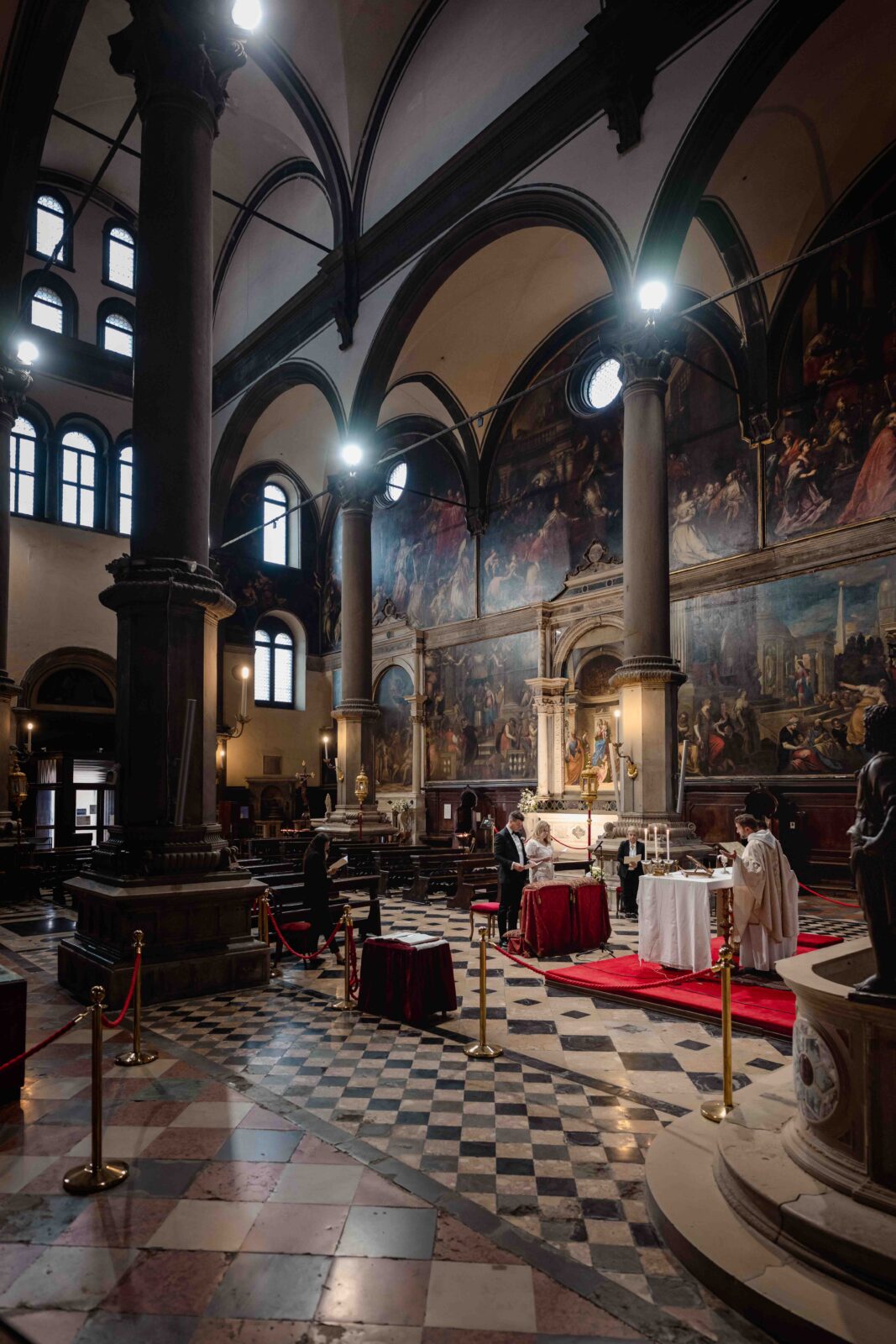
What distinguished this moment was not its scale. It was its quality of attention. An elopement in a Venetian church imposes a specific kind of focus. The surrounding architecture does not compete with the couple. It supports them. The vastness of the nave, rather than diminishing the intimacy of the moment, concentrated it.
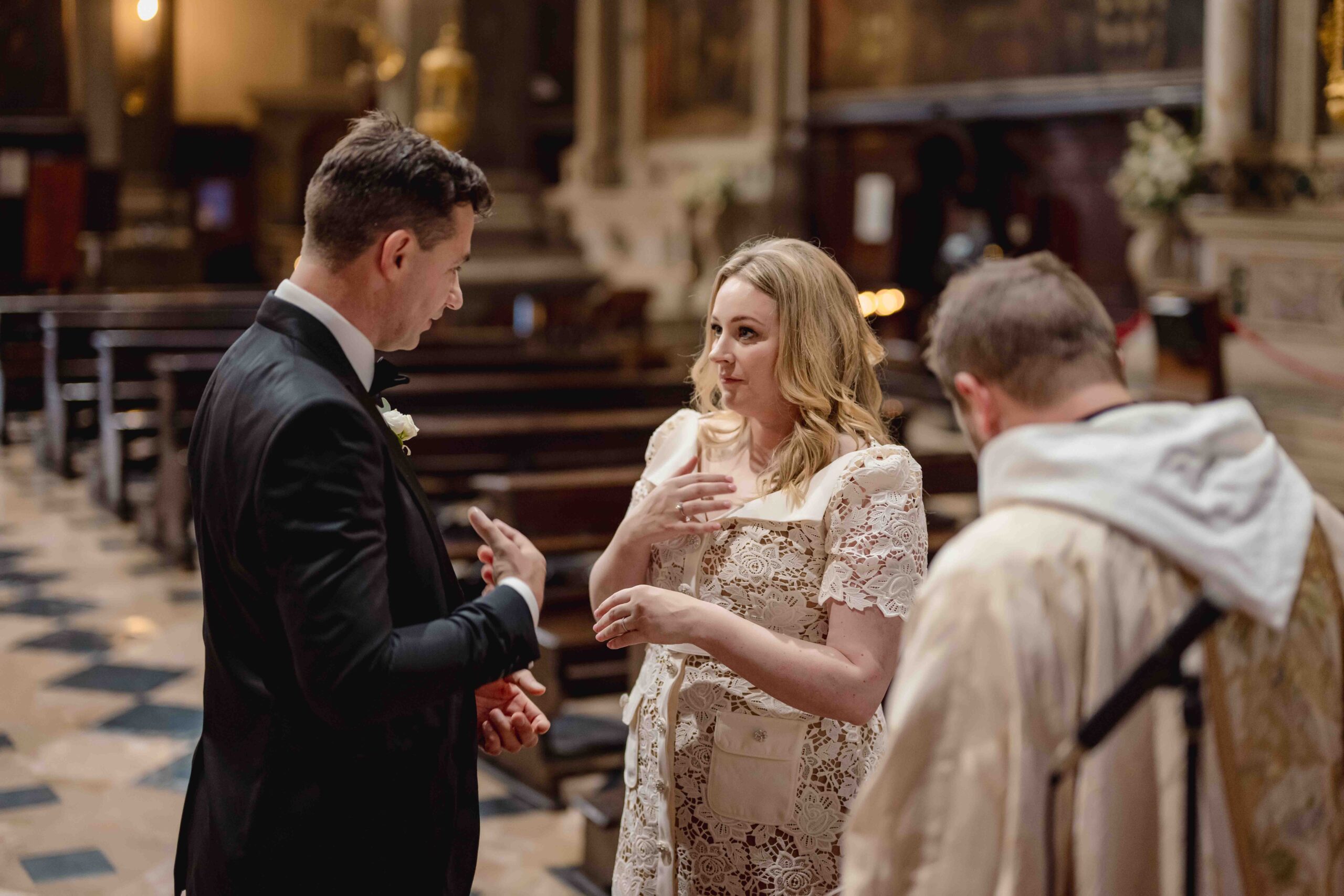
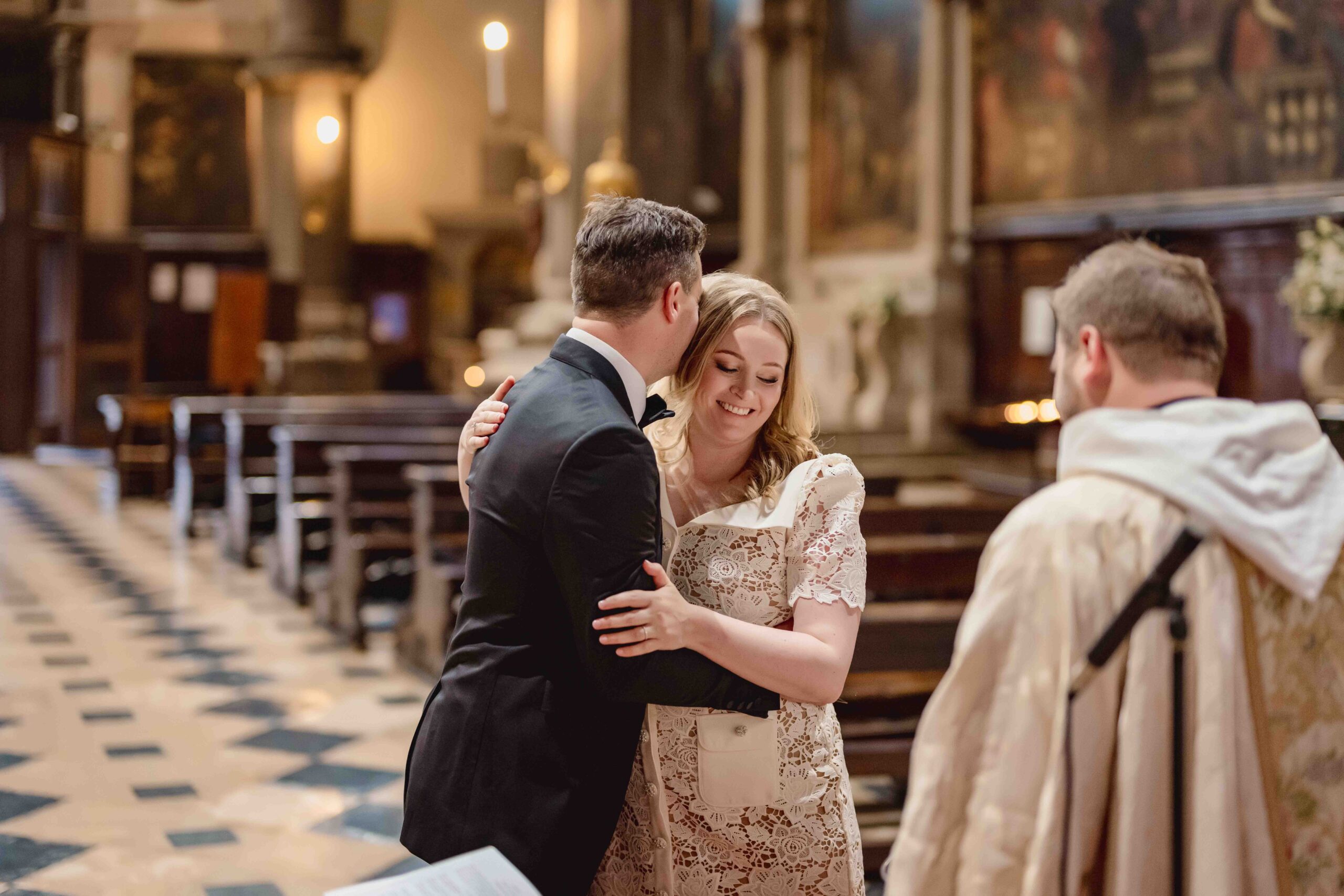
This is the contrast that Venice can produce when approached with restraint: architectural grandeur and the quiet presence of two people in perfect equilibrium. The sacred space carries an implicit invitation to seriousness, not performative solemnity, but genuine full attention. When you elope in a church in Venice, you are not borrowing a backdrop. You are entering a living place with its own history and its own meaning.
Moving Through Venice by Water: The Gondola Elopement Experience After the Rite
Leaving San Zaccaria after the religious rite, Ruth and Alan chose to move through the city by water. A gondola first, then a private boat taxi across the lagoon. From the canal, Venice revealed a different register of experience. The movement slowed perception. The city became fluid, almost abstract.

Moving through Venice by gondola after an intimate ceremony serves a precise emotional function. After the concentrated stillness of the church interior, the water creates transition without rupture. It allows breath, distance, and re-entry into the city at a pace that belongs entirely to the couple.
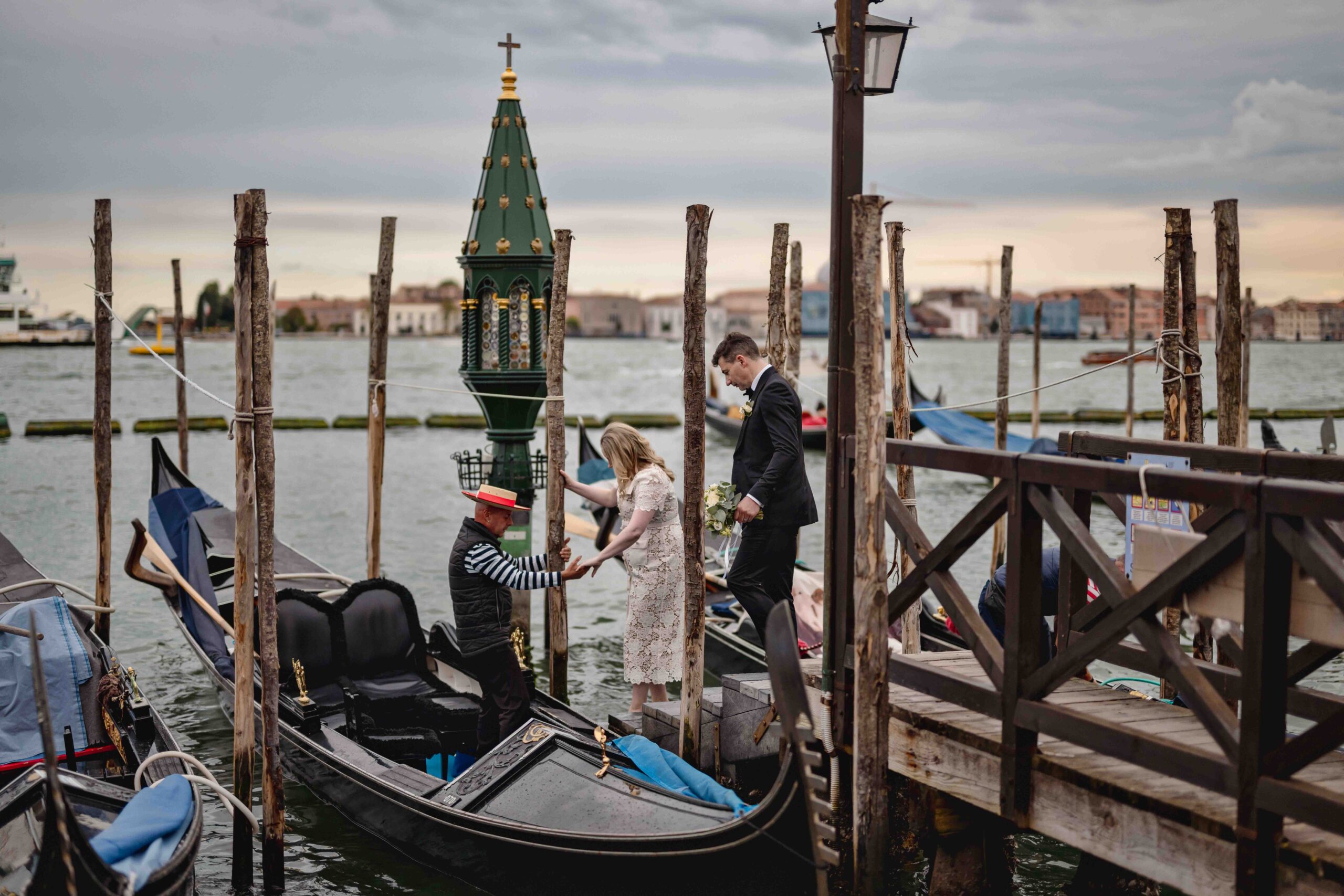
This is why a gondola elopement experience in Venice is so naturally paired with a church rite. The contrast is not jarring. It is complementary. Stone and water. Vertical enclosure and horizontal openness. Venice is constructed on exactly this kind of layered opposition.
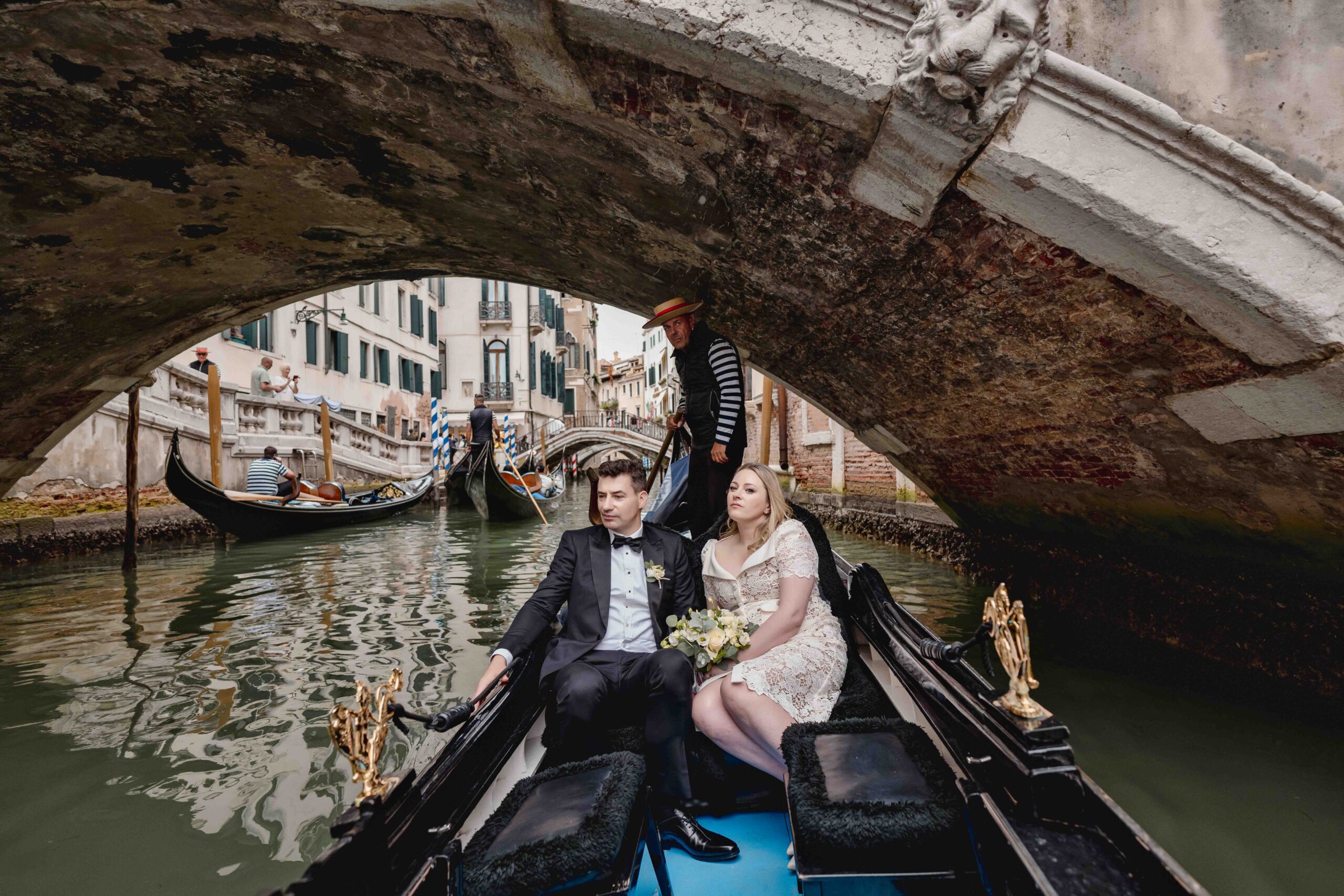
After the rite at San Zaccaria, the most coherent continuation of the day is a private gondola through the quieter canals behind the Riva degli Schiavoni toward San Giorgio Maggiore. The full account of how a gondola elopement experience in Venice is structured : the route, the light, and the transition from water to open lagoon is covered in a dedicated guide.
San Giorgio Maggiore: Light, Horizon, and the Return to the World
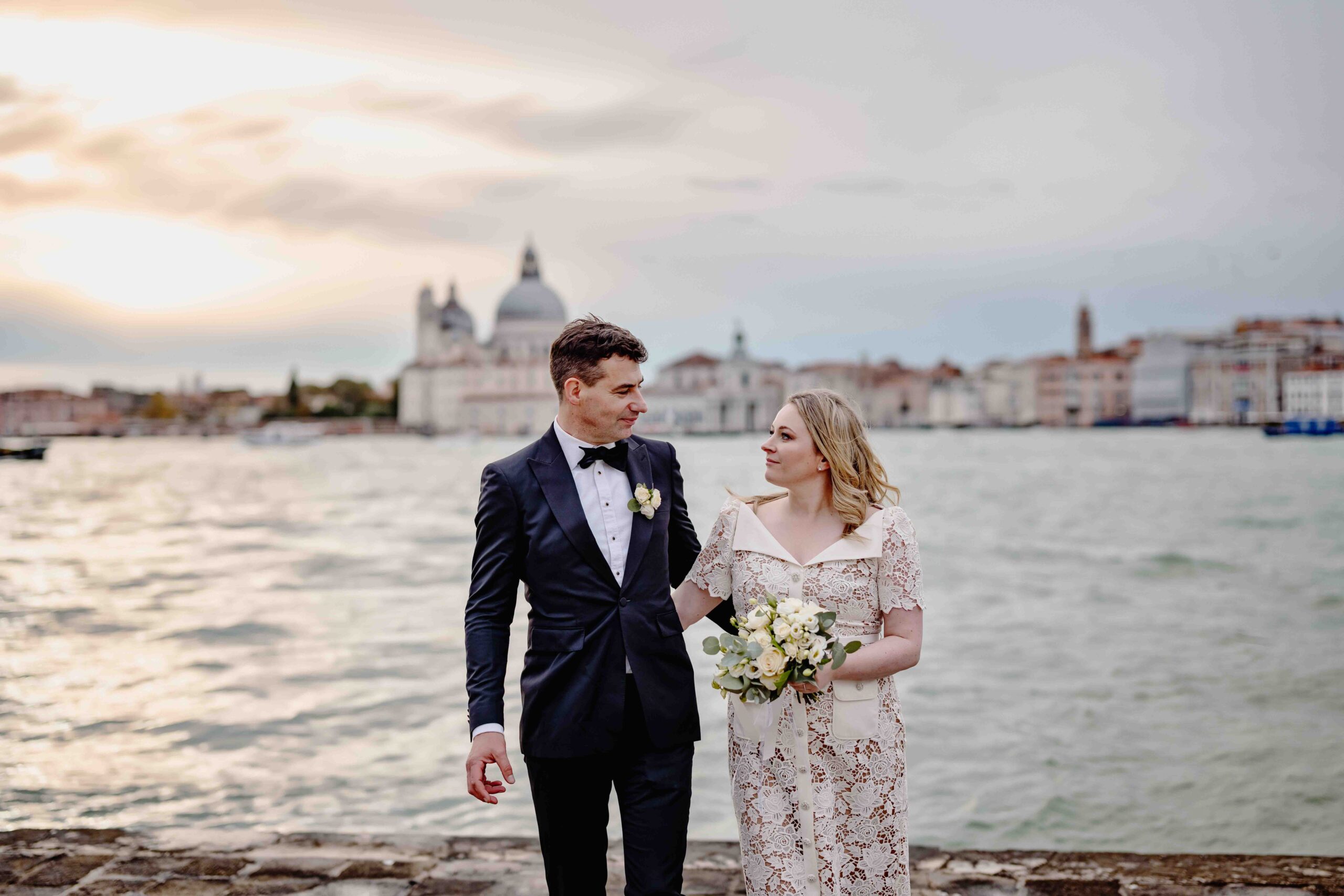
After the passage on the water, Ruth and Alan arrived at San Giorgio Maggiore, the island directly facing the Bacino di San Marco. This setting offers one of the most balanced perspectives in the entire lagoon. The city is no longer enclosing here. It expands. Architecture meets open horizon. Stone meets water. Light becomes structural rather than decorative.
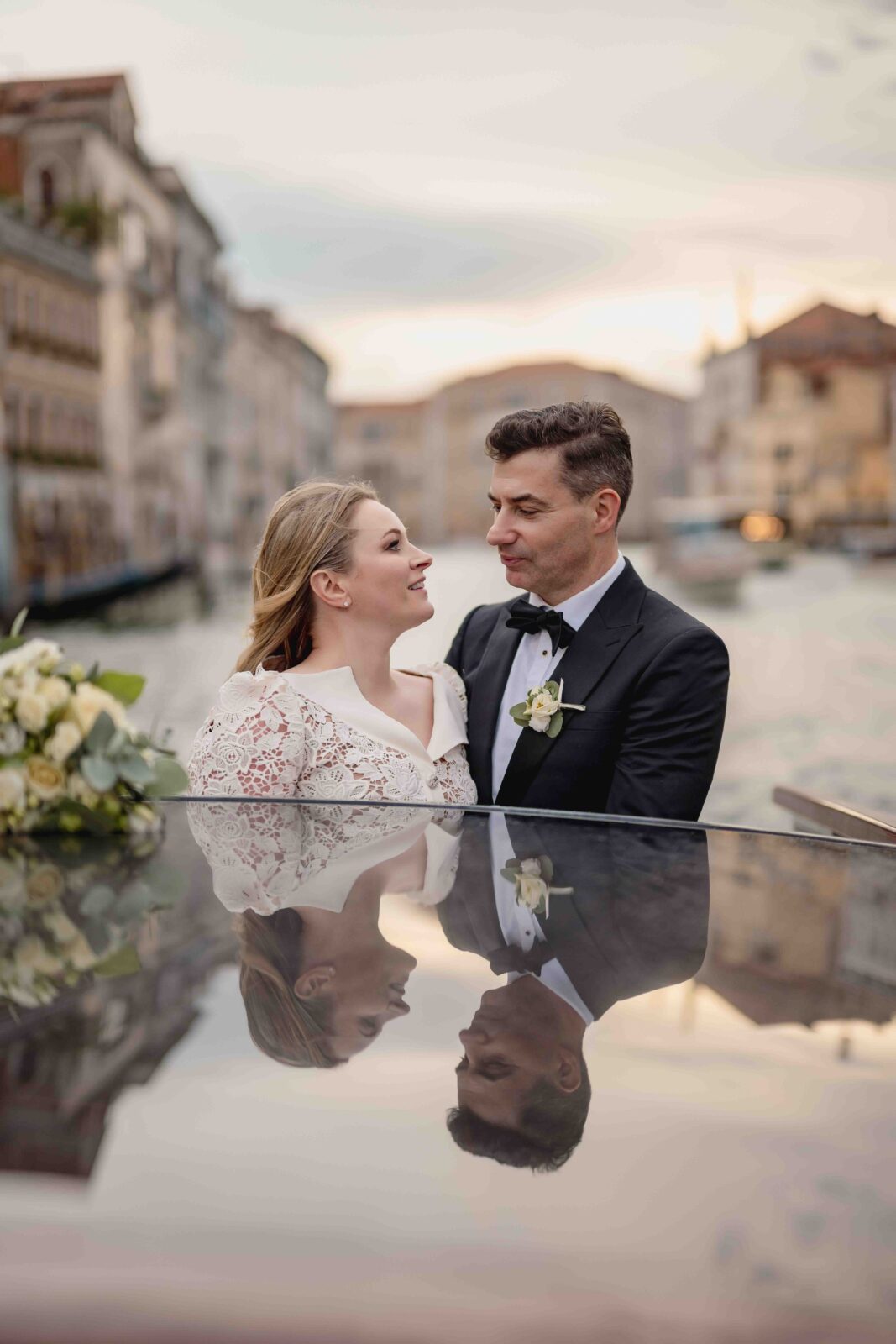
From San Giorgio, Venice appears as a coherent whole rather than a succession of narrow passages. The distance creates a particular kind of calm. The couple reconnected simply as themselves, outside the symbolic density of the church interior, in a space where time felt genuinely unhurried.
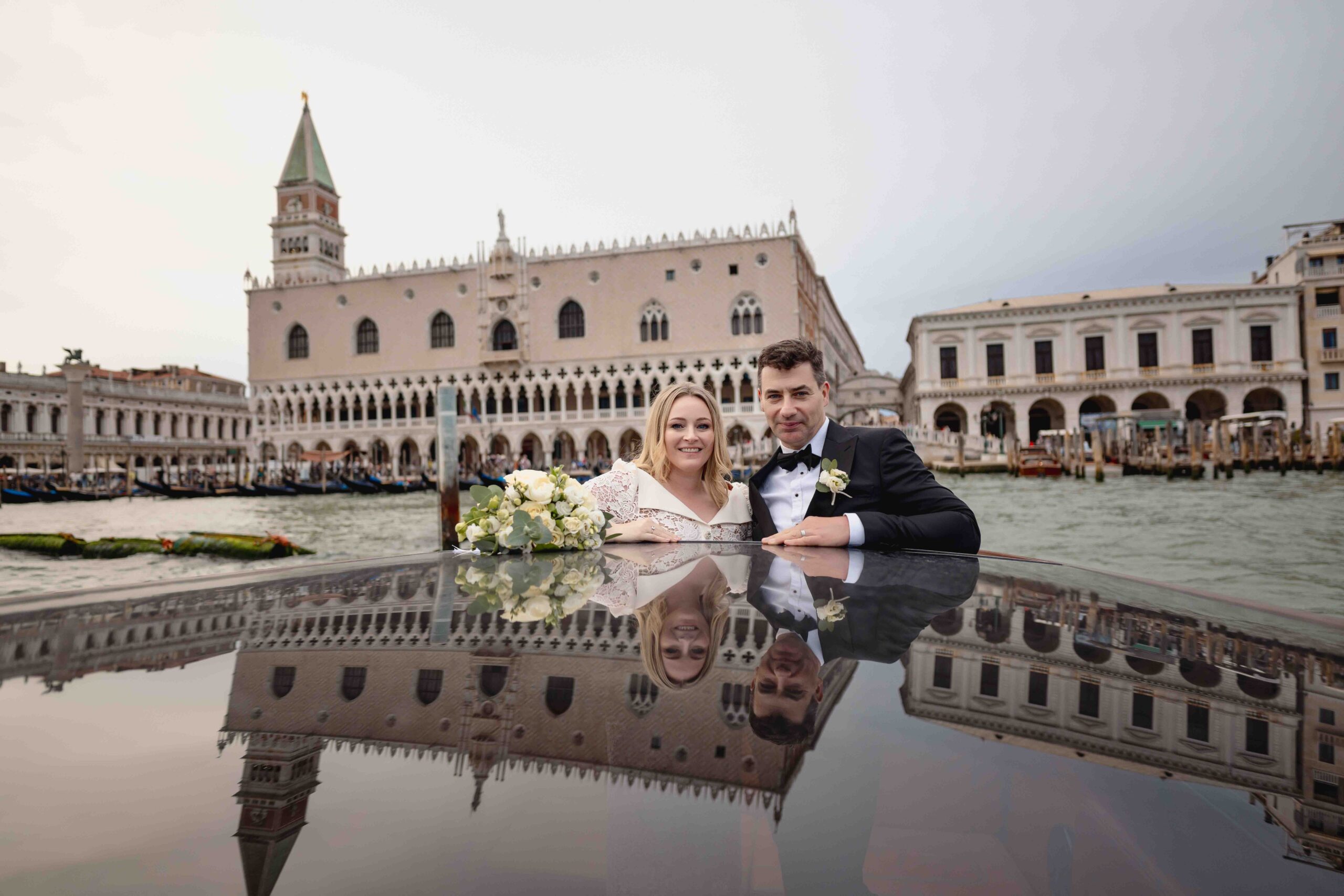
This transition from the enclosed sacred space of San Zaccaria to the open horizon of San Giorgio Maggiore mirrors what a well-structured elopement in Venice can accomplish: a sequence of places, each chosen for its specific emotional register, forming a coherent experience rather than a collection of locations.
How to Plan an Elopement in a Venetian Church: A Practical Guide
Planning an elopement in a Venetian church requires advance preparation, local knowledge, and a clear understanding of which type of rite is possible in a given space. San Zaccaria is both an active parish church and a state museum. Any intimate ceremony at San Zaccaria must be arranged through the appropriate ecclesiastical or civic channels, depending on whether you are seeking a recognized religious rite or a symbolic one.
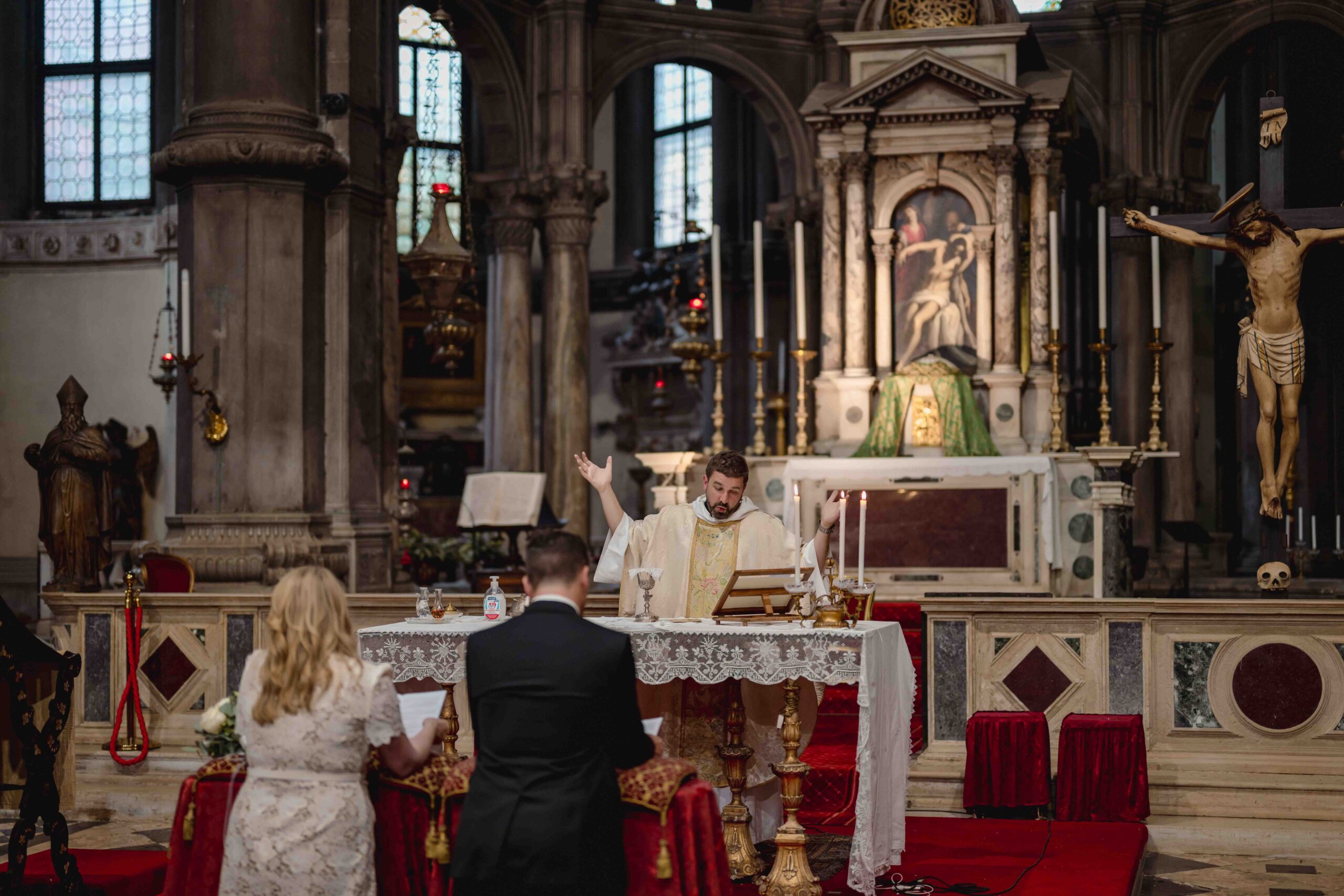
Two main options for their Venice church elopement.
A symbolic religious rite can be organized privately with an independent celebrant, without requiring civil or canonical documentation like at Scuole grande dei Carmini This is the most accessible path for international couples and allows complete freedom in language, content, and structure. The church provides the setting; the meaning is entirely yours.
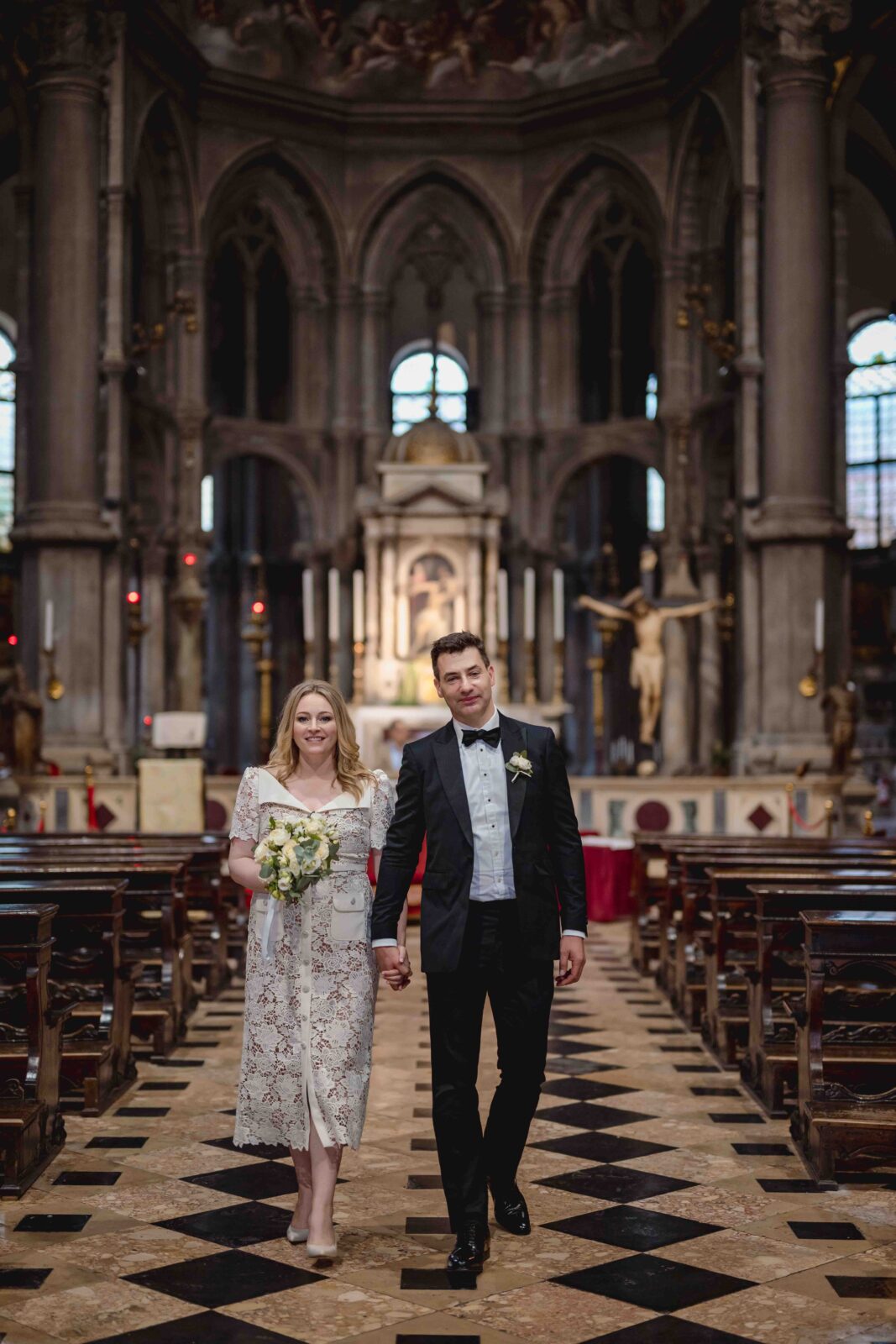
A canonical Catholic ceremony requires both partners to fulfill the conditions established by the Diocese of Venice: documentation, preparation meetings, and direct coordination with the parish. The process typically takes twelve months or more, but results in a fully recognized religious union in a Venice church.
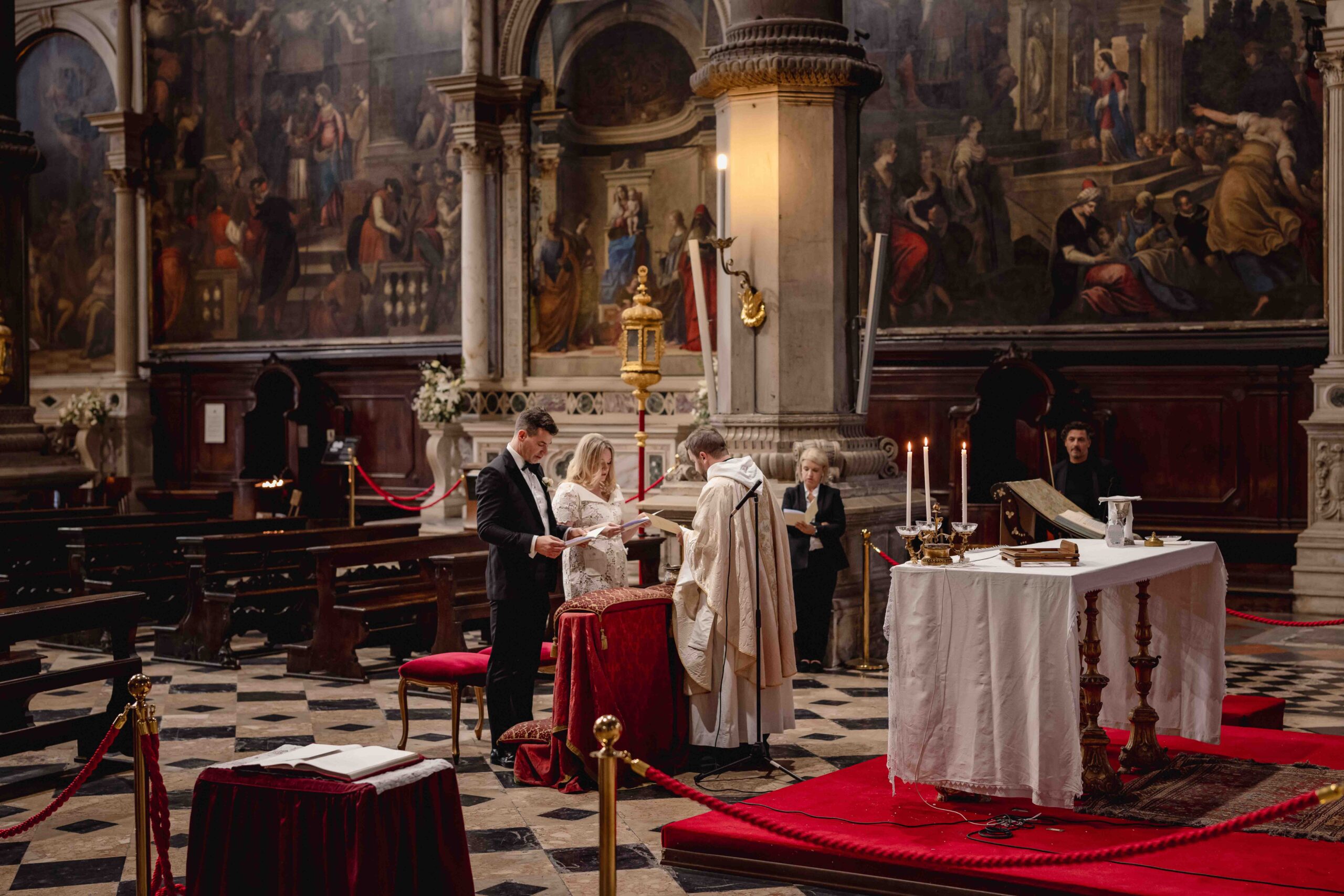
For most couples choosing to elope in Venice from abroad, the symbolic rite provides the depth of atmosphere and the emotional weight of a sacred space without the administrative complexity of the canonical path.
Define your ceremony type first. The type of rite determines whether you work with a civil officiant, an independent celebrant, or the church administration directly. This single decision shapes every subsequent choice.
Book your planner early. An experienced local planner who coordinated Ruth and Alan’s experience, is essential for navigating access to the church, coordinating vendors, and ensuring the timing of the day respects both the space and your intentions.
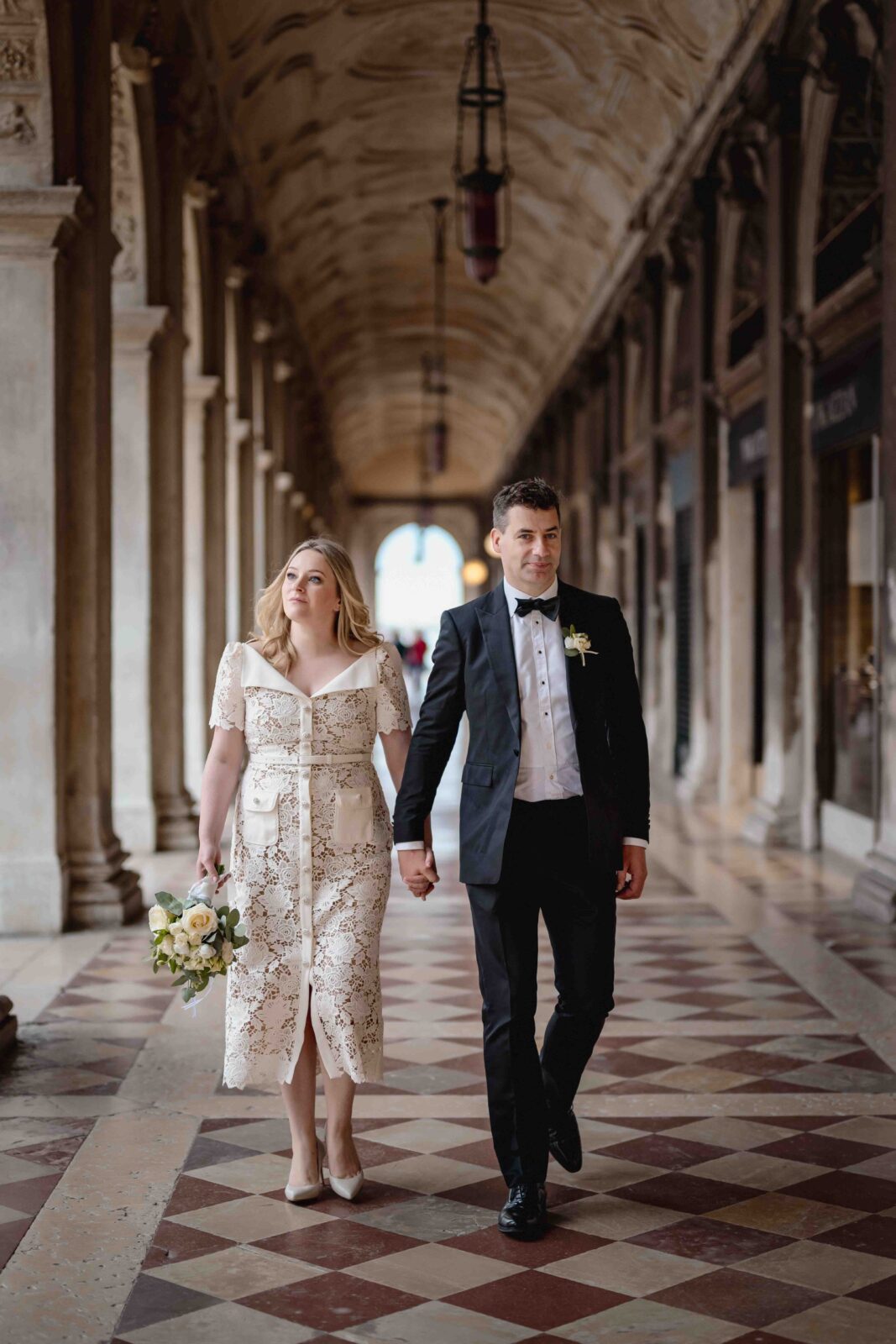
Think in sequences, not locations. The most powerful elopements in Venice are built around a coherent progression of places and atmospheres, each one preparing the next. San Zaccaria, the water, San Giorgio: the logic is emotional, not logistical.
San Zaccaria is one option among several distinct ceremony locations in Venice that carry genuine historical and architectural weight. The choice depends on the kind of atmosphere the couple wants to create, the size of the group, and the relationship between the ceremony space and the rest of the day’s itinerary.
Planner : Brillianteventitaly