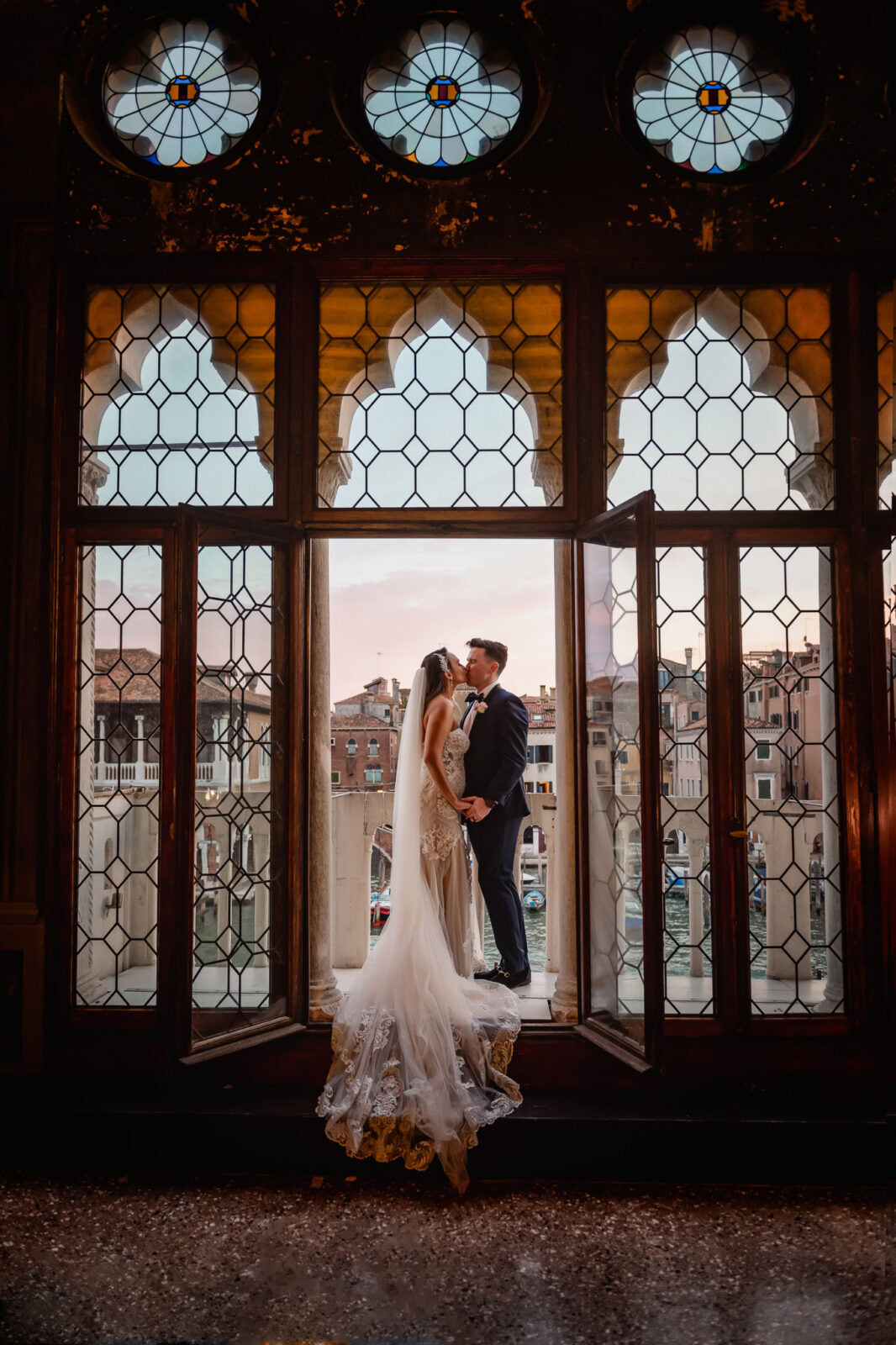
Water, light and architecture shape a wedding day in Venice, from the setting of the ceremony to the journey between places. An intimate symbolic celebration, a civil wedding in a historic palazzo and a destination wedding with guests each need a different approach.
I have put this guide together from my perspective as a photographer based in Venice. It follows the practical decisions that shape the day, while keeping space for the atmosphere, people and moments you want to remember.
Define Your Wedding Vision
Before choosing suppliers or arranging transfers, decide what kind of celebration you want.
I suggest starting with three questions:
Do you envision a private ceremony or a celebration with guests?
Are you drawn to a symbolic ceremony, a civil wedding or a religious service?
Do you imagine an intimate atmosphere or a more formal celebration?
Venice can accommodate a discreet elopement or a larger destination wedding. A clear idea of the experience you want helps you choose the venue, guest arrangements and pace of the day.
Choose the Right Wedding Venue in Venice
The venue shapes both the character of your wedding and how you move through it. I consider its architecture and light alongside the time available for photographs and the practical journey between spaces.
Historic palaces and private venues
A private Venetian palace can bring architectural grandeur and a sense of intimacy. Confirm the rooms included in your booking and the extent of any exclusive use before assuming that the entire building will be private.
Churches and religious venues
A church wedding connects the ceremony with the traditions of its religious community. Preparation, documentation and permission to use the church need to be discussed with that community in advance.
Gardens and outdoor locations
Secluded gardens and island venues can offer a quieter setting for an intimate wedding or symbolic ceremony. Consider the journey to the venue, the available space and the arrangements for the date you choose.
Luxury hotels
A hotel can combine accommodation, event spaces and, in some cases, panoramic views. Keeping several parts of the celebration at one address can simplify a destination wedding with guests.
Each type of venue has its own capacity, access arrangements and planning timetable. I recommend confirming your main venue before finalising suppliers whose work depends on the location.
Understand Legal Requirements for Getting Married in Venice
Understand the legal requirements for getting married in Venice
The requirements depend on the ceremony, your nationality, residence and circumstances. Establishing the correct procedure early helps you plan the rest of the day.
Civil wedding
A civil wedding conducted through the required procedure is legally binding in Italy. The Comune di Venezia must confirm the documents for your situation, including identity documents, any required birth certificates and the appropriate certificate of no impediment or equivalent.
Processing times and the form of the documents vary. Ask the civil registry and the relevant consular authorities what to obtain, when to obtain it and when to submit it.
Religious wedding
A religious ceremony follows the requirements of the specific faith. These may include preparation meetings, documentation and approval from the relevant clergy or religious authority.
Confirm separately whether the ceremony will have civil legal effects and which formalities are needed.
Symbolic wedding
A symbolic ceremony does not create a legal marriage and does not require the civil marriage dossier for the ceremony itself. Many international couples choose to marry legally elsewhere and hold their personal celebration in Venice.
The venue’s agreement and any permissions required for the setting still apply. Freedom in the words and format does not mean unrestricted use of any location.
Work With a Local Wedding Planner
Organising a destination wedding from abroad can involve several venues, suppliers and journeys. A local wedding planner can help coordinate venues, permissions, suppliers, logistics and the schedule.
Depending on the service you agree, a planner can assist with:
Venue selection and availability.
Supplier coordination.
Creating the wedding timeline.
Planning transport within Venice.
Administrative procedures and contact with the relevant offices.
This can be particularly useful when you are using several locations or welcoming guests who do not know the city. My role is the photography; a planner can coordinate the wider celebration, while the competent authorities confirm legal requirements.
Plan Your Wedding Budget
Costs vary with the venue, season, guest count and services you choose. I recommend setting priorities before committing to individual elements.
The main categories to consider are:
Venue rental.
Catering and beverages.
Ceremony setup.
Boat transport.
Photography and videography.
Flowers and decoration.
A clear budget helps you decide which parts of the day matter most and discuss the scope of each booking.
For photography coverage and a quote based on your plans, explore my service page.
Create a realistic wedding timeline
Access arrangements, boat journeys and seasonal conditions all influence the schedule. I use the following as an indicative planning sequence, rather than a fixed deadline for every wedding:
Around 12 months before: choose a date, secure the venue and begin planning.
Around 9 months before: start the legal planning with the relevant office and book key suppliers. Confirm when each formal step and document should be completed.
Around 6 months before: finalise the main logistics and confirm accommodation.
Around 3 months before: refine the wedding-day timetable and transport.
Around 1 month before: reconfirm all bookings.
Some weddings need more time, while a smaller celebration may come together sooner. Follow the authorities’ timetable for legal procedures, and keep flexibility when your day involves several locations.
Organise accommodation and the guest experience
For a destination wedding, the experience begins with your guests’ arrival. I suggest considering:
Central accommodation that works with the wedding locations and the walking routes.
Clear arrival instructions.
Organised boat transport where it is needed.
Optional activities before or after the wedding.
Venice offers cultural experiences that can complement the celebration. Keep them optional and leave enough time for guests to settle in and enjoy the city without filling every part of the schedule.
Prepare for Practical Challenges
Planning for the city’s physical conditions helps make the day more manageable. Consider:
Changes in the weather.
High water and its possible effect on routes.
Vehicle access limits and the need to move through the historic centre on foot or by water.
Walking distances and uneven surfaces.
Check the weather and the city’s tide forecasts close to the date, and discuss how the timetable or route can be adapted if necessary. These details matter for both the couple and the guests, as well as for the time available for photographs.
Enjoy the Experience
The ceremony is one part of the day. The atmosphere, the people beside you and the moments between planned events also become part of its memory.
When I plan the photography with you, I want the schedule to leave room for those moments. Thoughtful preparation can help you be present in the celebration rather than occupied with every transition.
Final Thoughts
The ceremony is one part of the day. The atmosphere, the people beside you and the moments between planned events also become part of its memory.
When I plan the photography with you, I want the schedule to leave room for those moments. Thoughtful preparation can help you be present in the celebration rather than occupied with every transition.
Frequently asked questions about planning your wedding in Venice
I recommend allowing around nine to twelve months, especially for a particular venue, a popular date or a civil or religious ceremony.
For a smaller or symbolic celebration, six to nine months can be a useful starting point. These are planning recommendations. The actual timetable depends on administrative requirements, venue and supplier availability, and your guests’ arrangements.
A civil wedding is legally binding in Italy when conducted through the required procedure by an authorised civil registrar at an approved venue.
A religious wedding follows the rules of a particular faith and may have civil legal effects, depending on the rite and the required formalities.
A symbolic wedding has no legal effect as a marriage. It allows more choice in language and format, while the venue’s rules and any necessary permissions still apply.
A symbolic ceremony can be held in Italy with the relevant venue arrangements and permissions, but it does not create a legal marriage or an official marriage certificate.
Many international couples complete the legal marriage in their home country and hold a symbolic celebration in Venice.
Requirements depend on nationality, but typically include:
Valid passports
Birth certificates
A certificate of no impediment (often called Nulla Osta or equivalent)
Official translations and, in some cases, apostille or legalization
Documents must be submitted to the civil registry office of Venice within specific timeframes.
Yes. For a standard civil wedding ceremony, the Comune di Venezia requires two adult witnesses with valid identification.
I think about the seasons in terms of light, comfort and the pace of the city:
April to June: often mild conditions, with popular dates worth enquiring about early.
September to October: atmospheric light, with changeable weather to allow for.
July and August: heat and busy areas can influence the time chosen for outdoor photographs.
November to March: potentially quieter periods, shorter days and greater weather uncertainty.
These are broad planning considerations, not a forecast for your date. Your choice depends on how you feel about crowds, the light you prefer and how flexible the arrangements can be.
Within the historic centre, guests generally move on foot and by boat. I recommend clear meeting points, generous time margins and coordinated boat transfers where needed.
Choose the route with the actual venues and guest group in mind, rather than relying on distance alone.
A wedding planner is not mandatory. I would particularly consider one when:
You are planning from abroad.
The day involves several venues or locations.
Your guests are unfamiliar with Venice.
You are arranging a civil or religious ceremony.
Local experience can help with coordination and administrative preparation. Agree the planner’s responsibilities clearly; the legal decisions and approvals remain with the relevant authorities.
Italy provides civil unions for same-sex couples, a legal institution distinct from marriage. The Comune di Venezia describes a procedure for two adults of the same sex.
Confirm the requirements for your nationality and legal circumstances with the civil registry and the relevant consular authorities, including how the union will be recognised in your home country.