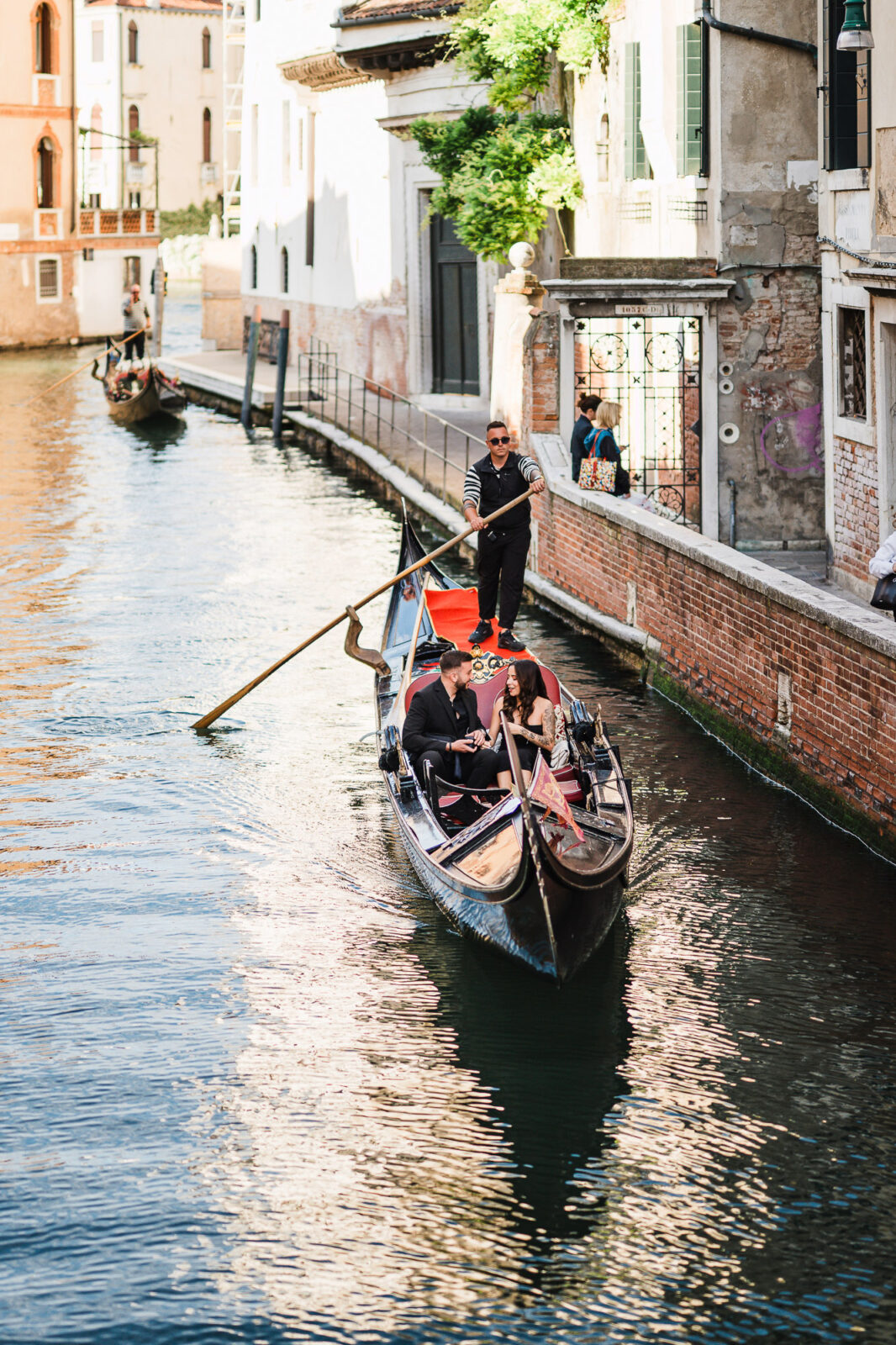
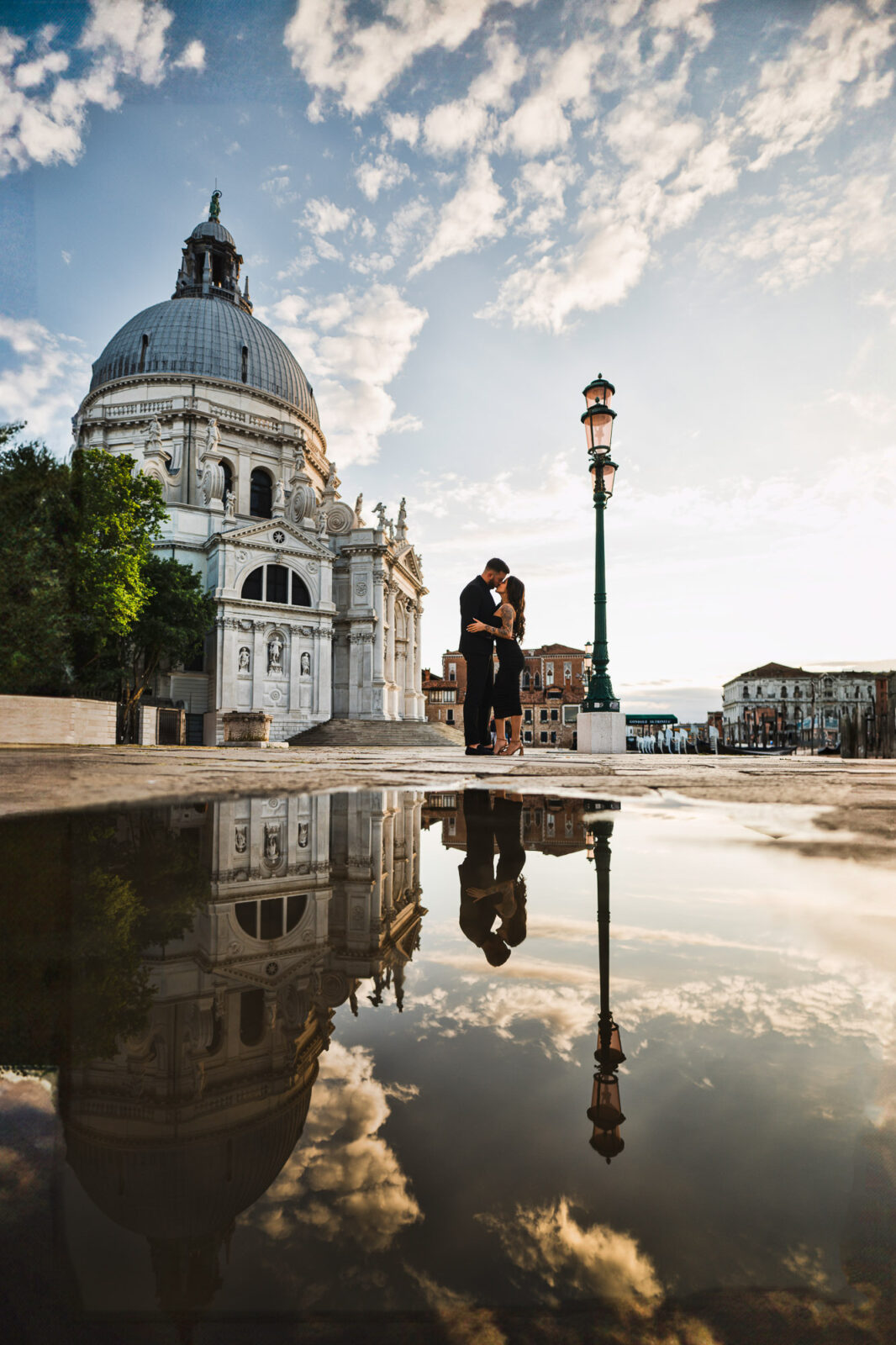
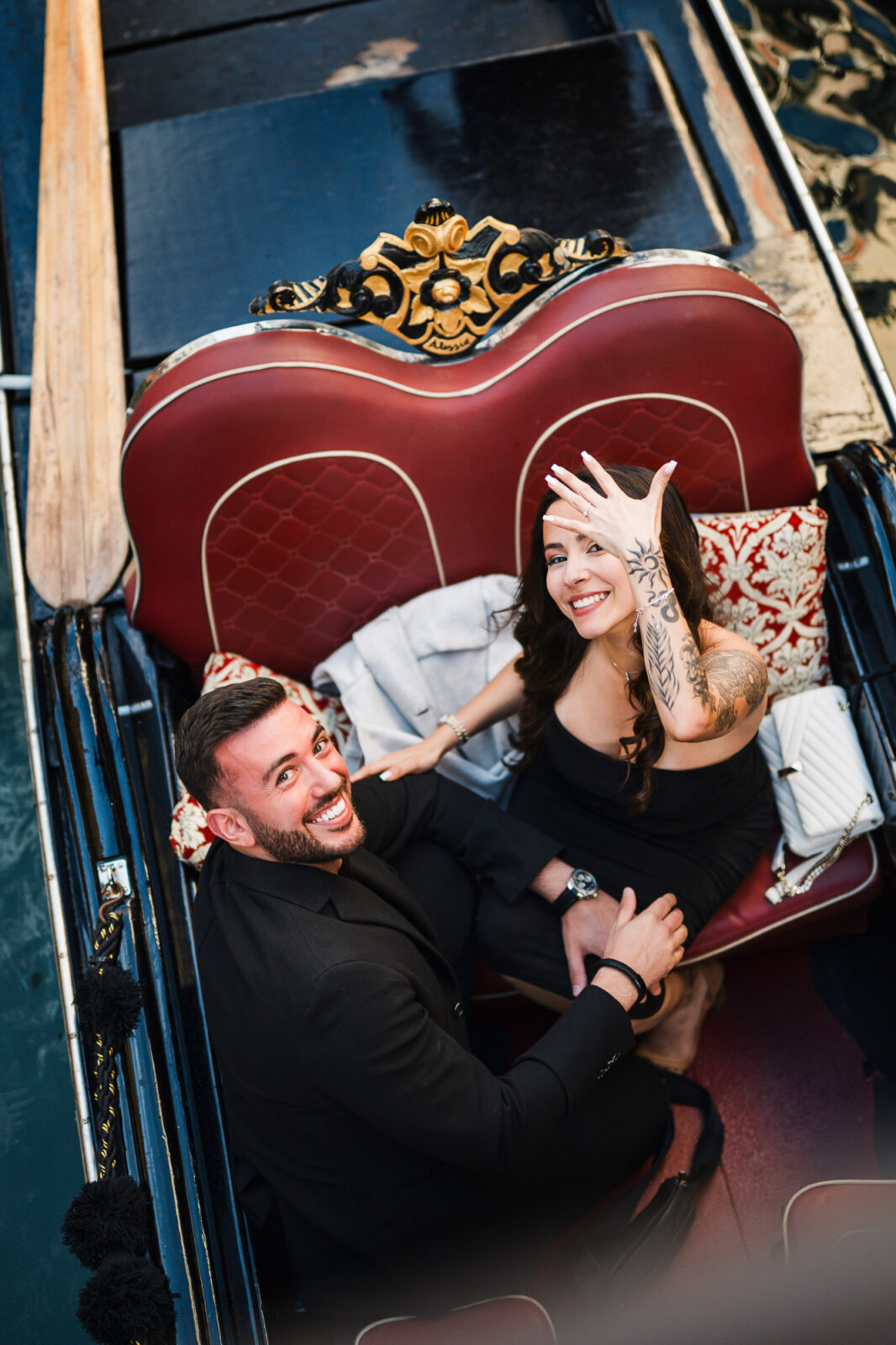
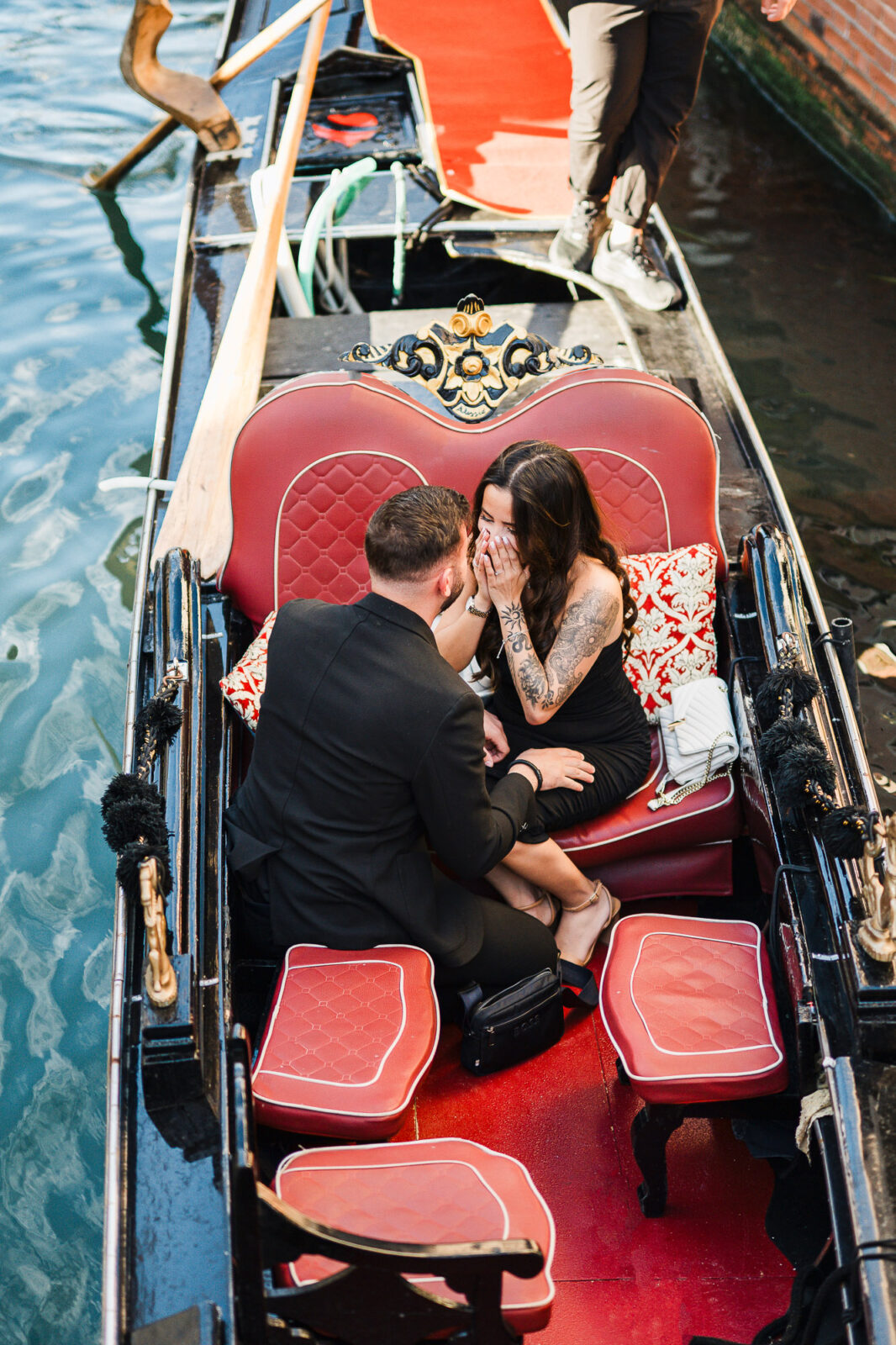
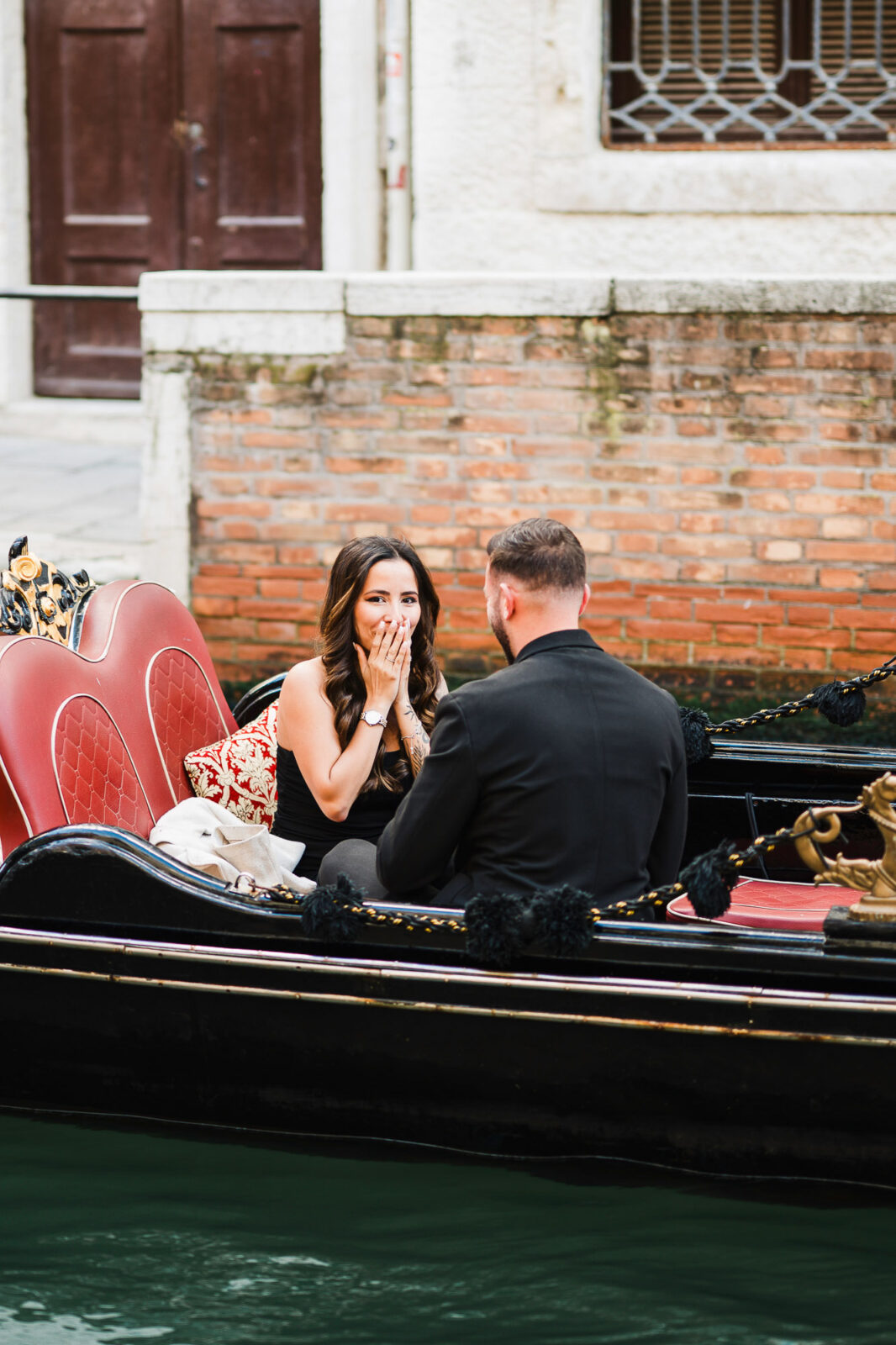
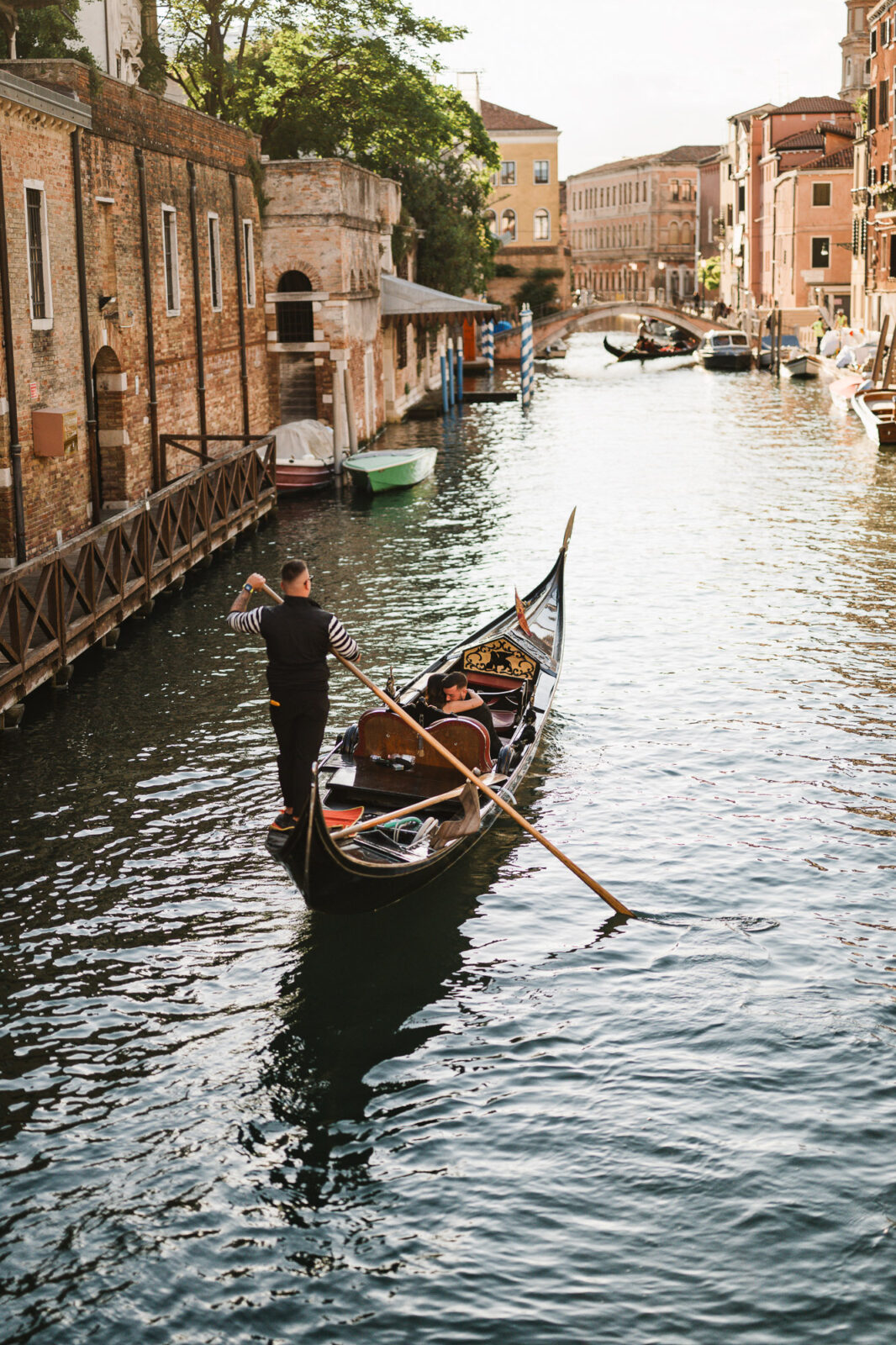
A Venice gondola proposal is one of the few situations where the setting does the emotional work for you before a single word is spoken. The movement of the boat, the sound of water against stone walls, the narrowing of the canal as you glide under a bridge these elements produce a quality of attention and presence that is difficult to replicate anywhere else. The person being proposed to is already in a state of heightened sensory awareness before the moment arrives.
Planning this moment, however, is not about finding the most beautiful canal and hoping for the right second. Venice is a complex environment. Light changes within minutes depending on cloud cover and the angle of the sun relative to the canal. Gondola traffic varies by time of day and season. Bridges that look ideal for a hidden photographer can be crowded with tourists or perfectly quiet, depending entirely on timing. This guide covers every practical element of planning a gondola proposal in Venice from the route and the season to the coordination of the photographer and the post-proposal portrait session.
If you want to compare the gondola with other proposal settings across the city, the complete guide to the best places to propose in Venice covers bridges, island views, and panoramic options.
Why a Venice Gondola Proposal Works
The gondola creates a specific kind of privacy that is unavailable on land. Once you are on the water, the city recedes. The narrow canals of Cannaregio or Dorsoduro block the noise of the streets, the architecture creates a contained visual world, and the movement of the boat eliminates the sense of destination that dominates every land-based experience in Venice. There is nowhere to be except here, in this moment, in this canal. This is the psychological condition that makes a gondola proposal Venice so reliable as an emotional experience, regardless of the couple’s familiarity with the city.
From a photographic perspective, the gondola also solves the crowd problem that affects every major piazza and bridge in Venice during peak season. The canals, particularly the smaller ones in Dorsoduro and Cannaregio, have almost no tourist foot traffic on the surrounding fondamente. A hidden photographer positioned on a bridge a few meters upstream has a clean sightline to the gondola without needing to compete for space or angle. This makes the Venice gondola proposal with hidden photographer approach consistently more reliable for capturing genuine reactions than any land-based proposal location in the city.
For a different approach entirely, the Venice bridge proposal guide explains alternative routes on land and the specific bridges that work best for a hidden photographer.
A Real Venice Gondola Proposal: Cyril and Katerina
When Cyril contacted me, the planning constraint was clear: Katerina had no idea he was preparing anything. They had met while travelling, and Venice was a city they had always intended to discover together. The proposal needed to feel completely organic to the trip rather than orchestrated, which meant the coordination had to be invisible.
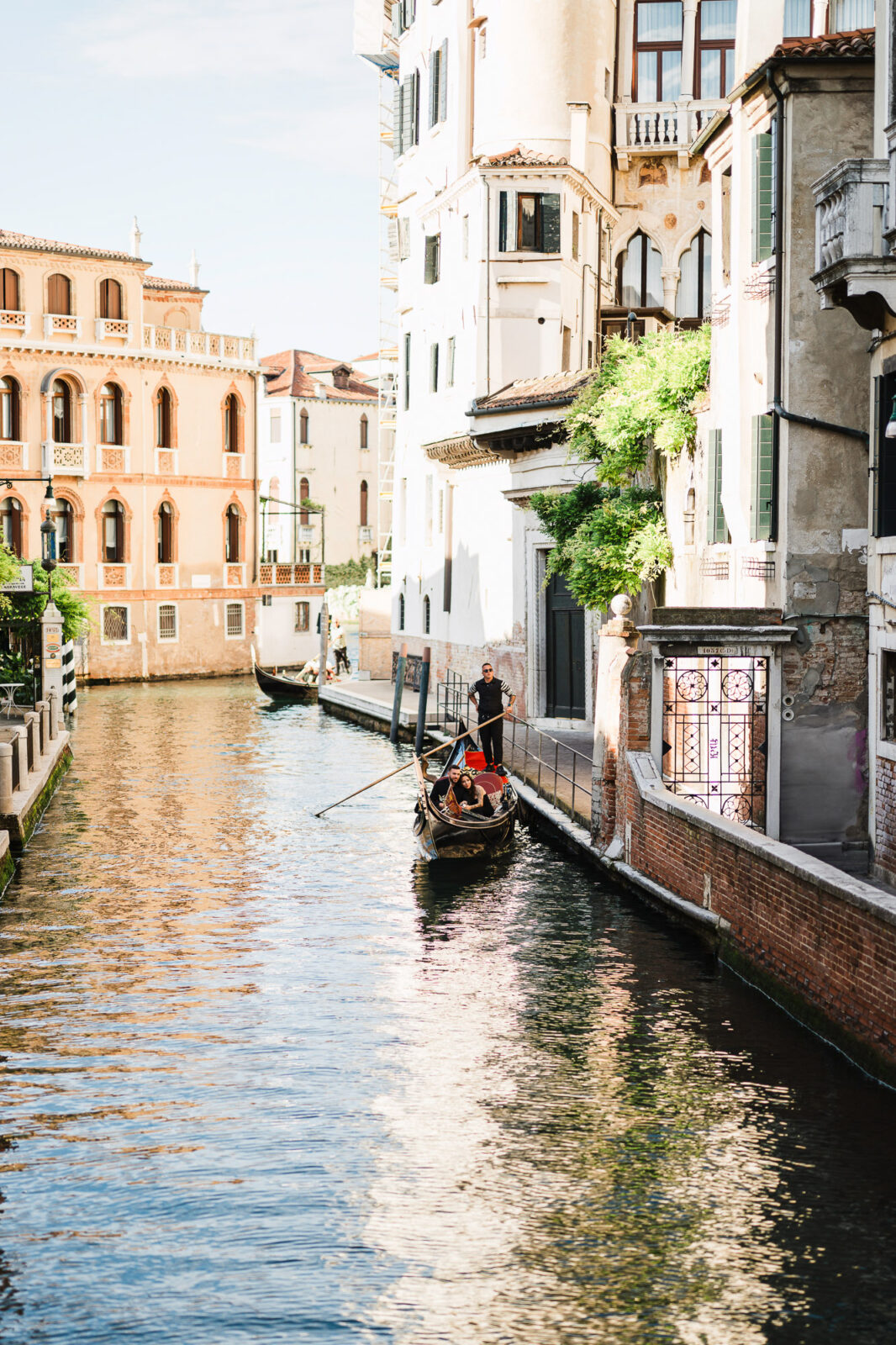
We structured three elements precisely. The route was a combination of the quiet canals behind the Accademia through to a specific bridge in Dorsoduro that provided an unobstructed sightline at a narrow canal bend. The timing was late afternoon, approximately forty minutes before sunset, when the canal walls carry warm reflected light without direct sun causing contrast problems.
When their gondola reached the bridge, Cyril knelt. Katerina covered her face with both hands, then smiled, then cried, then said yes. Because she had no awareness of a photographer, her reaction was unguarded and completely genuine. That absence of self-consciousness is what the hidden photographer approach produces, not just technically, but emotionally. After the surprise, I joined them on the gondola for a few minutes of close portraits while the emotion was still immediate, then we moved on foot through Dorsoduro as the light transitioned toward sunset.
Testimonials
I recommend her with my eyes closed. 😊
The photos are simply extraordinary.
” A big thank you to Laure, who made this moment magical and unforgettable.
In addition to her skills as a photographer, I must highlight how incredibly helpful she was throughout the entire planning process, offering great advice for the photo locations.
Once again, it was an outstanding job that allows us to preserve this moment for the rest of our lives.”
-cyril descaves
How to Plan a Gondola Proposal in Venice: Six Steps
Step 1 : Choose the Right Time of Day for a Venice Gondola Proposal
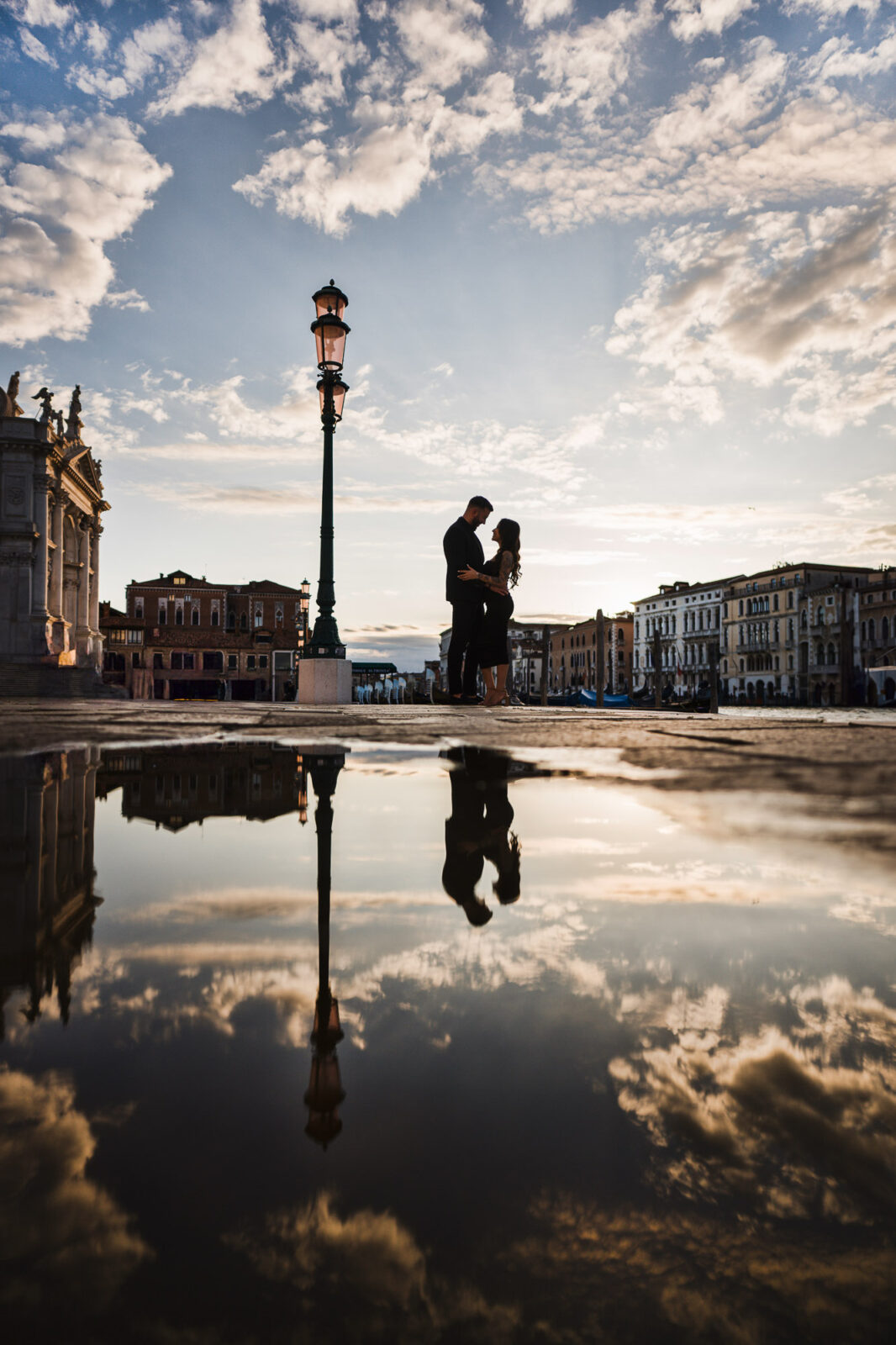
The time of day is the single most consequential decision in the planning of a Venice gondola proposal. The two reliable windows are golden hour in the late afternoon, typically 60 to 90 minutes before sunset, and early morning before 9am. Golden hour produces warm canal reflections, soft directional light on the palazzo facades, and a cinematic quality of color that photographs well without any technical adjustment. Early morning offers a different register entirely: the canals are empty, the gondolier is relaxed, and the light is pale and even. For couples who want absolute privacy and silence, morning is the more reliable choice. For those who want rich visual atmosphere, late afternoon is stronger.
Step 2 : Pick the Best Season
Each season in Venice creates different conditions for a gondola proposal. Spring, from April through May, offers comfortable temperatures and soft pastel tones in the canal light. Autumn, from September through October, gives the warmest colors and the most balanced relationship between ambient light and sky. These are the two strongest seasons for gondola proposal photography. Summer works well but the heat and the crowd levels require adjusting the timing to early morning or late evening. Winter is the most atmospheric season, with acqua alta fog over the canals and empty streets, and suits couples who prefer intimacy over visual spectacle. Weather changes quickly in Venice regardless of season, so a backup plan is always part of the preparation.
Step 3 : Define the Canal Route and Atmosphere
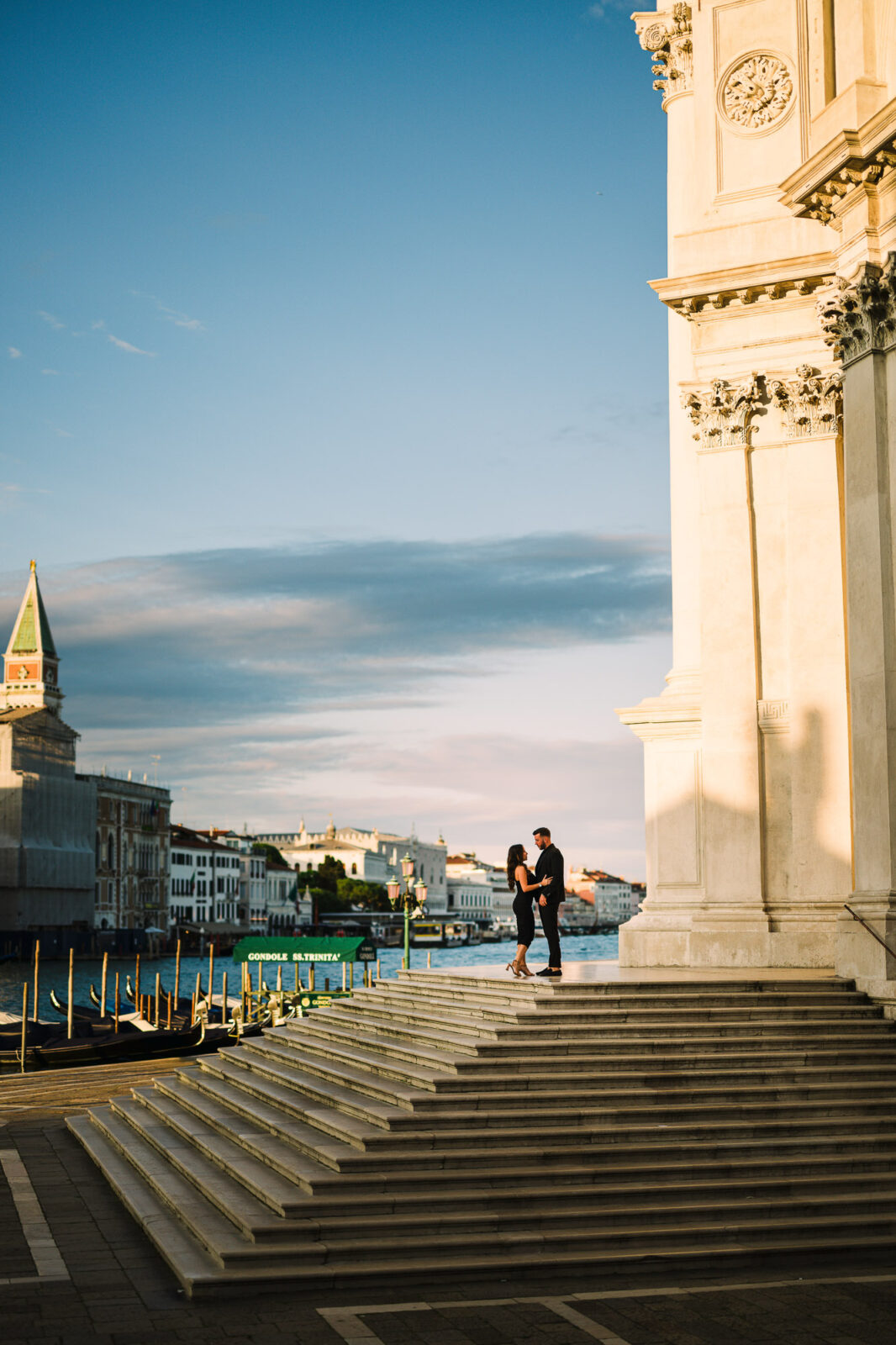
The canal route determines the rhythm and visual register of the entire proposal. A well-designed route for a gondola proposal Venice begins in a calm narrow canal for privacy, transitions through at least one symbolic wider space for scale and light, and includes a specific bridge where the photographer is positioned. The quiet canals of Dorsoduro between the Accademia and the Zattere are among the most reliable: they are narrow enough to create intimacy, wide enough to allow a clean photographic angle, and the surrounding architecture is dense and beautiful without being tourist-saturated. The stretch near the Grand Canal around the Accademia adds open sky and broader light when the photographer needs a wider composition. The route is always defined in advance with the gondolier and confirmed on the day.
Step 4 : Choose the Right Gondolier
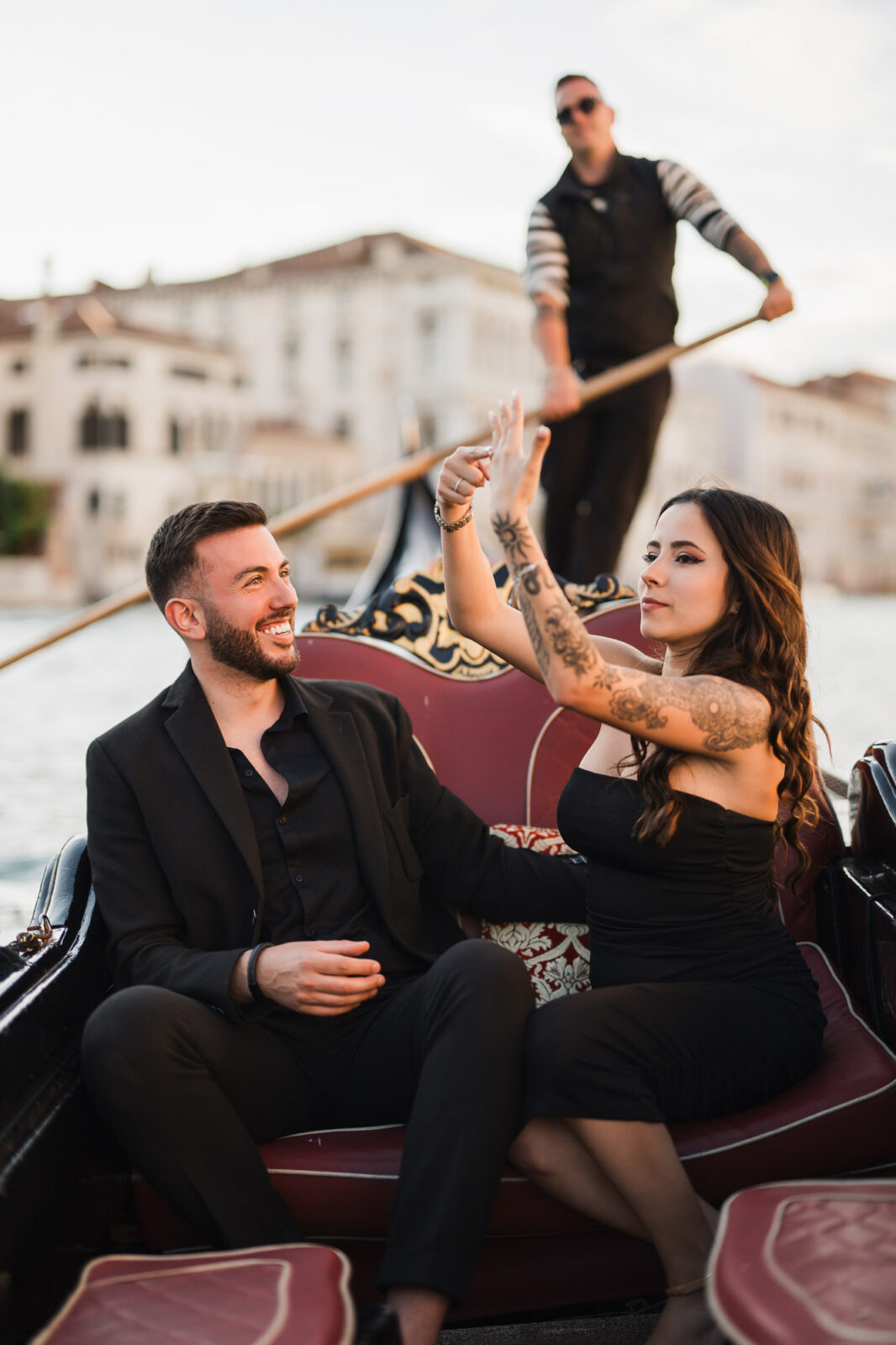
Not all gondoliers are equally suited to a surprise proposal. For this specific situation, you need someone who understands the plan precisely, is comfortable with a brief pause at a predetermined bridge, and knows quieter canal sections away from the main gondola routes near Piazza San Marco. The gondolier’s discretion and timing are not secondary considerations, they are the mechanism by which the entire surprise functions. A gondolier who knows the canals well enough to adjust the route spontaneously if another gondola creates a timing problem is essential for a coordinated Venice gondola proposal.
Step 5 : Add Personal Details to the Moment
Personal elements do not need to be elaborate to be effective. A single bunch of flowers passed to you before you board is often enough to shift the sensory register of the gondola. Some couples bring a bottle of prosecco to open immediately after the yes, which gives both people something to do with their hands during the first few minutes of the after-reaction. A letter written before the trip, read aloud in the gondola, is a format that photographs well because it gives the photographer a natural action to work around. A violinist on a nearby bridge is an option but requires coordinating a third person and adds logistical complexity, it works when executed correctly and reads as theatrical when it does not. The principle in all cases is the same: personal and specific is more powerful than elaborate and generic.
Step 6 : Plan the Post-Proposal Portrait Session in Dorsoduro
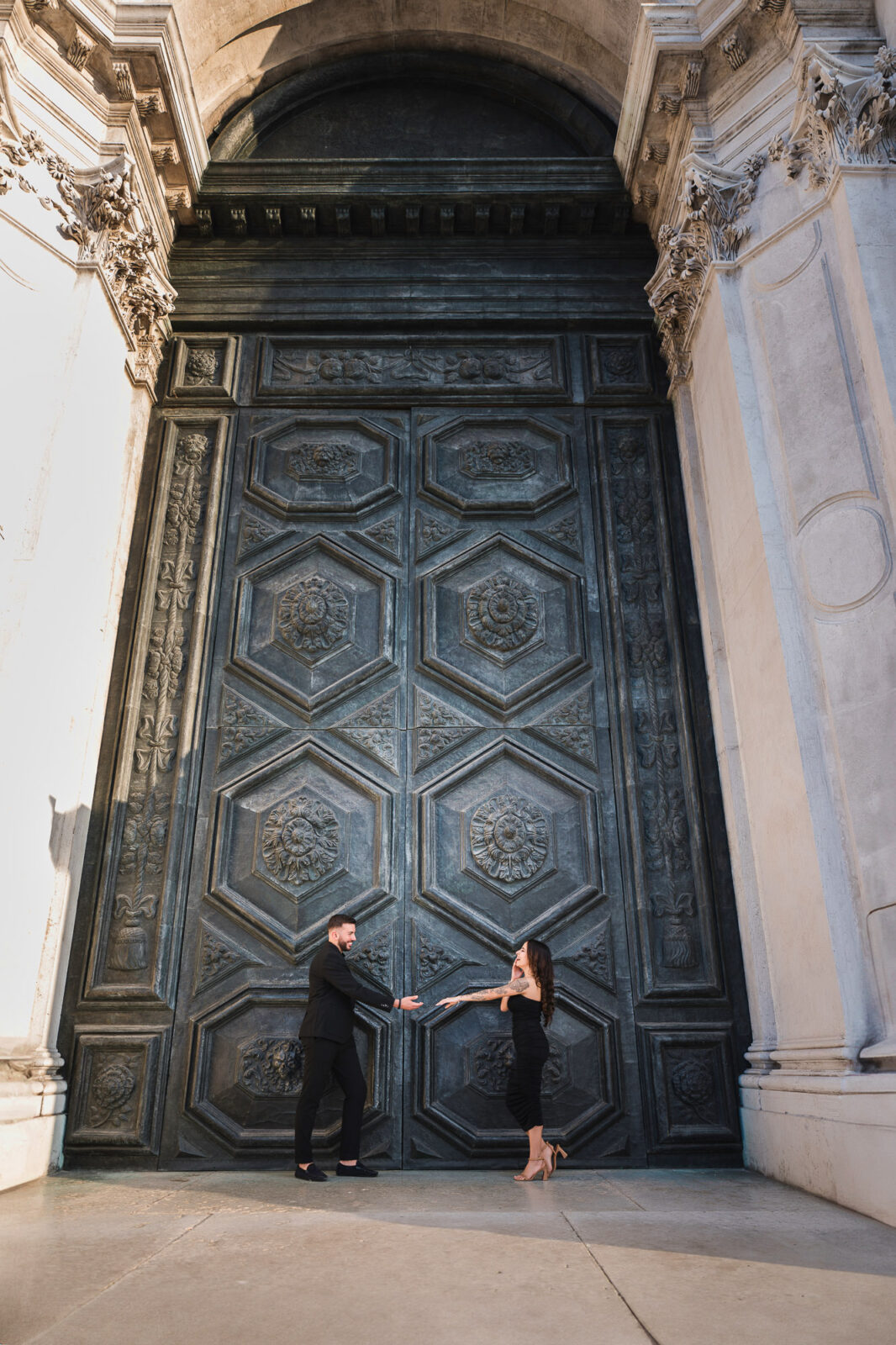
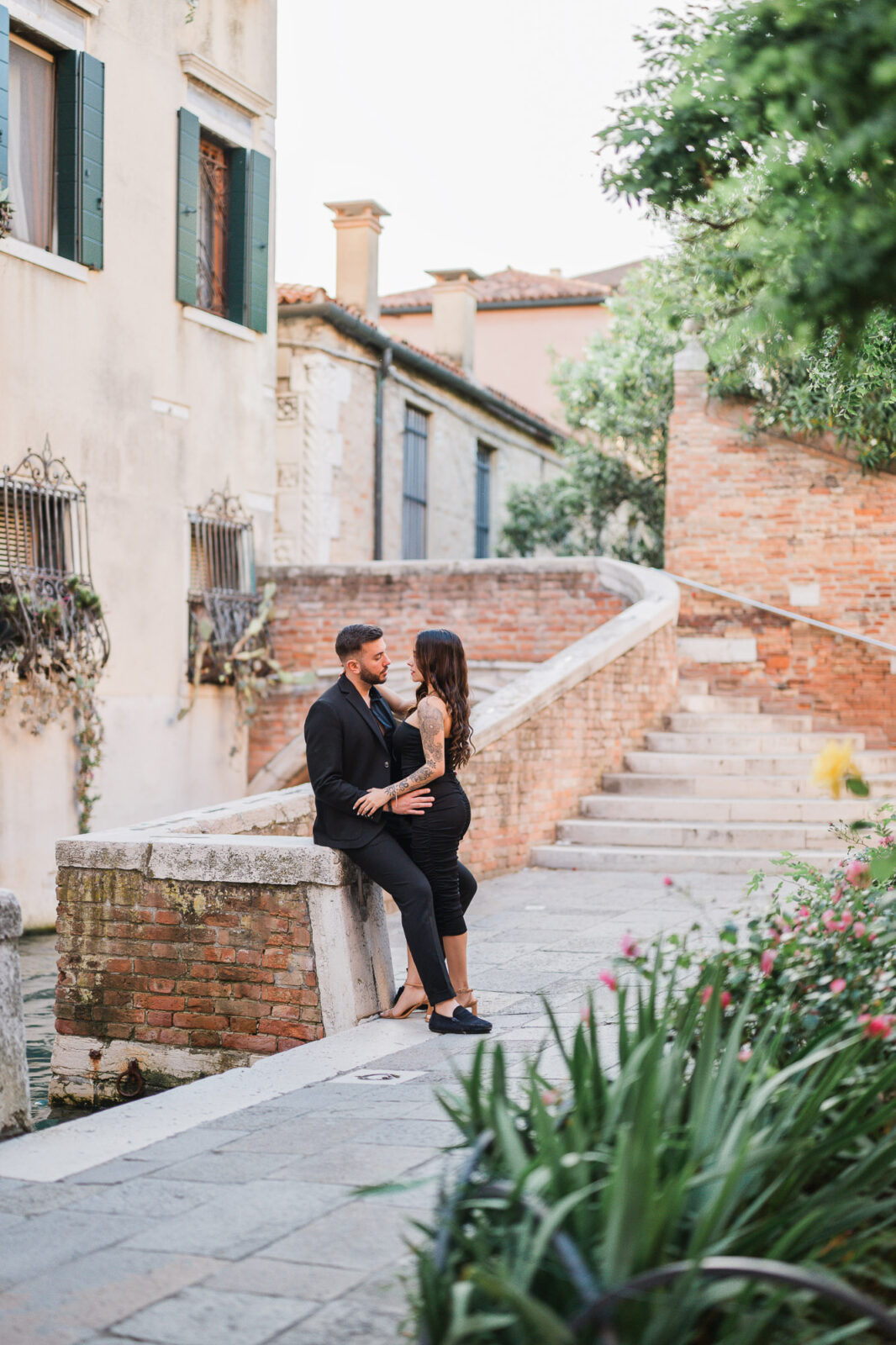
The 20 to 30 minutes immediately following a successful proposal are photographically the most productive of the entire session. The emotional energy is immediate and unguarded. After the close portraits on the gondola, the natural continuation is a short walk through the Dorsoduro neighborhood: the Fondamenta Gherardini, the Rio di San Barnaba, Campo Santa Margherita, and the Zattere waterfront are all within 10 minutes of the main gondola routes. These locations provide three visually distinct environments narrow canal-side fondamente, open campo spaces, and the wide lagoon-facing promenade within a single continuous walk. The combination of the water-based proposal sequence and the land-based Dorsoduro session produces a complete visual narrative of the day in under 90 minutes total.
For visual inspiration on how these Dorsoduro sessions develop, the Venice proposal photo gallery shows the full range of light conditions and canal locations across different seasons.
Hidden Photographer Positioning for a Venice Gondola Proposal
The effectiveness of a hidden photographer for a Venice gondola proposal depends entirely on the choice of bridge and the angle it provides. The ideal position is a small bridge slightly upstream of the proposal moment, where the canal bends enough to give the photographer a clean foreground but not so sharply that the sightline is blocked. At these positions, the photographer can stand among other tourists without drawing attention, a camera on a busy Venice bridge is invisible. The pre-agreed signal with the gondolier gives a 10 to 15 second window before the moment, which is sufficient to frame the composition and be ready. After the yes, the photographer approaches and joins the gondola for the close portrait sequence while the emotion is still present.
A Venice gondola proposal involves two separate costs: the gondola hire and the photography. A private gondola in Venice typically costs €200 for a 30 to 40-minute ride, depending on the time of day and whether a musician is included. Rates are higher in the evening. Photography for a gondola proposal session of 60 to 90 minutes, including the on-water coverage and the post-proposal walk, is priced separately and varies based on the photographer and the specific package.
For a complete overview of how a proposal day is structured in Venice, the Venice proposal photography services page covers the planning process in detail.
The quietest and most photogenic canals for a Venice gondola proposal are in Dorsoduro and Cannaregio. The canal sections between the Accademia and the Zattere in Dorsoduro are consistently the most reliable: they are narrow enough for intimacy, far from the main gondola traffic near San Marco, and the surrounding architecture is dense without being overwhelming. The Rio di San Barnaba and the Fondamenta Gherardini are particularly effective for the hidden photographer position. The Grand Canal near the Accademia bridge can be included for a wider light and sky composition, but the traffic level makes it unsuitable as the primary proposal location.
Yes, a Venice gondola proposal can be planned as a complete surprise. The key elements are: coordinating the gondolier in advance without the other person knowing, positioning the photographer on a bridge before the gondola departs, and using a pre-agreed signal as the timing mechanism. The gondola itself provides the ideal surprise context because the person being proposed to is relaxed and already in a heightened state of attention, which makes the genuine reaction both more likely and more visible.
Light rain during a Venice gondola proposal is manageable and often produces beautiful canal light. Gondoliers carry covers for the gondola seating area. Heavy rain makes the photography session difficult and the on-water experience uncomfortable, so most photographers who plan Venice proposals maintain a flexible date or a same-day weather window of 1 to 2 hours. If rain is forecast, the session can typically be shifted to the morning or evening of the same day when the weather clears. Venice in light fog or overcast conditions is also a visually distinctive environment that photographs well in its own way.
A complete Venice gondola proposal session typically lasts 60 to 90 minutes. This breaks into approximately 30 to 40 minutes on the gondola — covering the approach, the proposal moment from the bridge, and the close portraits after joining the boat — and 30 to 45 minutes of post-proposal walking portraits in the surrounding neighborhood. This duration allows for genuine variety in the images, from the canal-based wide shots to the intimate close portraits on foot, without exhausting either person emotionally or physically. Shorter sessions of 45 minutes are possible if the couple prefers to focus exclusively on the gondola portion.
A religious wedding in Venice typically lasts:
45 to 60 minutes for a standard Mass
30 to 45 minutes for a ceremony without full Mass
Timing is fixed and rarely flexible. Late arrivals, delays or extensions are generally not allowed due to the church schedule.
Yes.
Religious weddings in Venice come with strict photographic limitations, including:
restricted movement during the ceremony
limited shooting angles
no flash photography
silent operation required
An experienced photographer must adapt to these constraints while preserving visual coherence and narrative continuity.
see my page about which locations create the most powerful wedding photographs in Venice.
Plan Your Venice Gondola Proposal
Every proposal requires a specific plan: the route, the timing, the signal, and the coordination. Send the details of what you are planning and we will build the approach around your exact situation.
Write to me directly or contact me via WhatsApp for a direct conversation
or use the contact form to receive a detailed reply.